
What it is
A company that sells shares, notes or other securities in the United States must either register the offering with the SEC or rely on an exemption. Almost every private raise relies on an exemption, and the most common ones, Regulation D, require the company to file a notice within fifteen days of the first sale.2 The notice is Form D.
It is short. A typical filing is two or three screens of boxes and figures. It is free to read on the SEC's EDGAR system, usually within a day of being filed, and it stays there for good. The SEC also publishes every filing as structured data each quarter.5
Form D is a notice, not a disclosure document. The SEC does not review it for accuracy before it appears. It contains no financial statements, no business plan and no description of the terms. What it does contain is a set of facts a company rarely volunteers anywhere else. It says how much the company is trying to raise and how much it has raised so far. It says how many investors it has, and who is paid to sell.
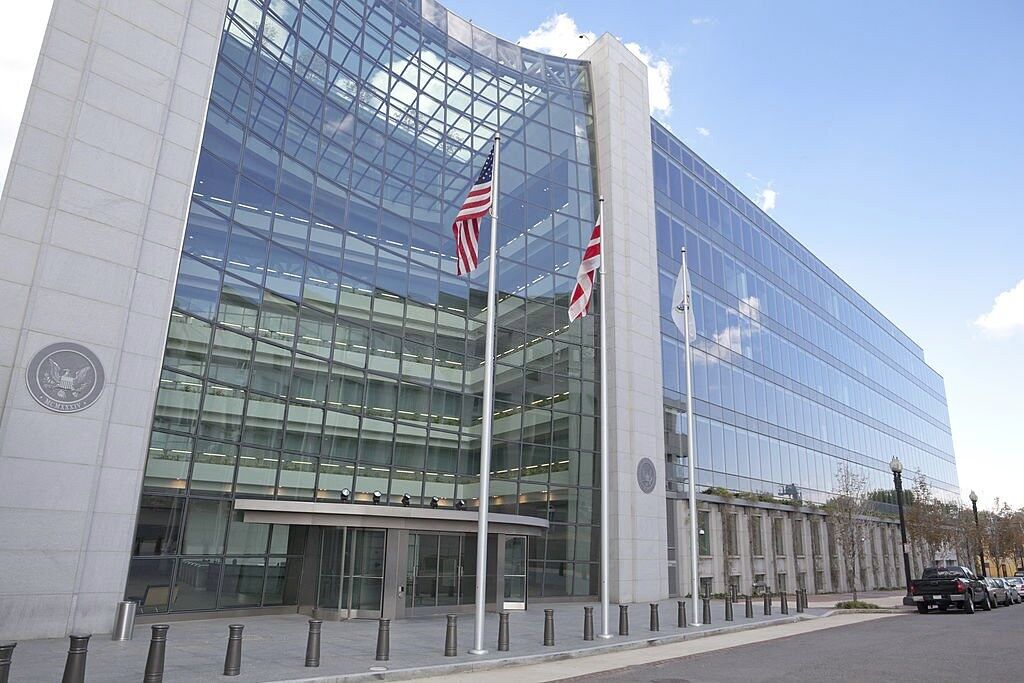
A Form D is a notice, not a disclosure. It tells you that a raise exists, not whether it is any good.
When it is filed, and when it is not
The clock starts at the date of first sale: the day the first investor is irrevocably committed. The notice is due fifteen calendar days later. After that, the instructions require an amendment in three cases only: to correct a material mistake, to reflect a change in what was filed, and once a year while the offering continues.1
The list of changes that do not need an amendment is the part to remember. It includes the amount sold, the amount remaining and the number of investors. A company may sell the whole round after filing and never say so.
Most companies file once and stop. Of the raises of $5m to $500m that began in 2019 to 2024, 15.1% ever amended, on our arithmetic from the data sets. Among those that amended and in the end reported selling in full, the median filing showing it came 215 days after the first sale. The middle half took 91 to 457 days.5
The parts, in order
The form has sixteen items.1 Here are the ones that matter, with what each one tells you. Beside each group is the same item read on a real filing: Athletic Brewing's notice of 25 October 2021, for an equity offering whose first sale was on 16 September 2021.7 Athletic Brewing makes non-alcoholic beer in Connecticut.
Items 1 and 2: who is raising
The issuer's legal name, its previous names, the state it is organised in, the year of incorporation, and its principal place of business with a phone number. If several entities are raising together, each is listed.
The legal name is often not the name the company trades under. A software company called Brightline may file as Brightline Holdings, Inc., or as an entity with no resemblance to its brand at all. Search by the address and the people as well as the name.
Item 3: related persons
Every executive officer, director and promoter of the issuer, with their address and relationship to it. This is often the most useful item on the form. It tells you who runs the company, and it names people who rarely appear on a company's website: the outside directors, the sponsor's representatives, the person behind an investment vehicle.
| Item 1: issuer | Athletic Brewing Holding Co LLC, a Delaware limited liability company formed in 2021. The brand was founded in 2017; the holding company that raises is four years younger. By 2024 it filed as Athletic Brewing Holding Company, LLC. Search for the filer, not the brand. |
|---|---|
| Item 2: place of business | Stratford, Connecticut, with a phone number. From November 2022 the filings give Milford, Connecticut. The address is a second way to find the same company. |
| Item 3: related persons | Five people: William Shufelt, executive officer and director, and four directors. The press calls the co-founder Bill Shufelt. The form uses legal names. |
| Signature | William Shufelt, Manager, on 25 October 2021. From November 2022 he signs as Manager and Chief Executive Officer. Titles on the form follow the legal entity. |
Item 4: industry group
One box from a fixed list: banking, biotechnology, real estate, technology, energy and so on, with "Other" for anything that does not fit. It is coarse and chosen by the company. Treat it as a hint.
Item 5: issuer size
A revenue range (or, for a fund, a range of net asset value), from "no revenues" to "over $100,000,000". Companies may choose "decline to disclose", and most do. When a company does give a range, it is one of the few public facts about a private company's size.
Item 6: the exemption
Which rule the company relies on. The common answer is Rule 506(b), the traditional private placement, which forbids general advertising. Rule 506(c) allows advertising if every investor's accredited status is verified. Rule 504 covers raises of up to $10m. Funds also claim an exclusion under the Investment Company Act, usually section 3(c)(1) or 3(c)(7).3
A 506(c) box means the company may be advertising the raise. It also means, on the record, that the raise is less likely to fill. In our reading of a decade of filings, advertised raises of $5m to $500m that began in 2022 to 2024 sold in full about a third as often as the rest.
Item 7: new or amended
Whether this is a new notice or an amendment, and the date of first sale. The date of first sale is the date the first investor became irrevocably committed. It may say "first sale yet to occur".
Item 8: duration
Whether the company expects the offering to last more than a year. Many say yes, which means they must amend at least once a year while it continues.
Item 9: what is being sold
Equity, debt, options or warrants, pooled investment fund interests, tenant-in-common interests, mineral property, or other. More than one box can be ticked. Debt plus equity often means a convertible note or a unit.
| Item 4: industry | Other. A brewer, filed under the catch-all. The box says little about what a company does. |
|---|---|
| Item 5: size | Decline to disclose. The usual answer. Revenue has to be found elsewhere, if anywhere. |
| Item 6: exemption | Rule 506(b). A private placement, not advertised. Every one of the company's eight notices from 2021 to 2024 says the same. |
| Item 7: new or amended | New; first sale 16 September 2021. Filed on 25 October, 39 days later. The filing date is not the date of the round: read Item 7. |
| Item 8: duration | Not more than a year. No annual amendment expected. |
| Item 9: securities | Equity only. The company's notice of May 2022 ticked debt; one in October 2022 ticked options. |
Item 11: minimum investment
The smallest cheque the company will accept from an outside investor. A high minimum, $250,000 or more, usually means the raise is aimed at professional investors. A minimum of a few thousand dollars usually means it is being sold to individuals.
Item 12: sales compensation
Anyone who will be paid, directly or indirectly, for selling the securities: a broker-dealer, a placement agent, a finder. Each is named, with their registration number if they have one and the states in which they will sell. Raises that name nobody are being sold by the company and its own people, or by investors who do not take a fee.
Item 13: the amounts
Three numbers: the total amount offered, the total amount sold so far, and the amount remaining. The amount offered may be "indefinite", which is common for funds and for companies that do not want to state a target.
This is the heart of the form, and the part most often misread. See the mistakes below.
Item 14: investors
The number of investors who have already invested, and how many of them are not accredited. A company relying on 506(b) may sell to up to 35 non-accredited investors who meet a sophistication test. Under 506(c) it may sell to none.
Items 15 and 16: fees and use of proceeds
The amount of sales commissions and finders' fees, and the amount of the proceeds that will be paid to the company's own executives, directors or promoters. The second is often zero. When it is large, it is worth asking why.
| Item 10: business combination | No. The raise is not part of a merger or acquisition. |
|---|---|
| Item 11: minimum investment | $0. No stated minimum. Read it with Item 14: 17 investors put in about $1.5m each on average, so the round was not sold to the public (our arithmetic). |
| Item 12: sales compensation | None named. Sold by the company and its own people, with no placement agent. |
| Item 13: amounts | Offered $25,000,651; sold $24,749,907; remaining $250,744. Sold as at 25 October 2021. An amendment eight days later says otherwise: see below. |
| Item 14: investors | 17, none of them non-accredited. |
| Item 15: commissions and fees | $0 and $0. |
| Item 16: proceeds to insiders | $0, with a note: "The executive officers will receive compensation from the Issuer's revenues and investment proceeds." Read the notes beside the boxes. |
What the form leaves out
A Form D does not give the price per share, the valuation or the terms of a note or preferred share. It does not name the investors. It gives no revenue or profit beyond the optional range, and says nothing of how the money will be spent beyond payments to insiders. It does not tell you whether the raise succeeded.
It also does not cover everything. Bank loans and most private credit facilities are not securities offerings and are never filed. A raise sold only outside the United States, under Regulation S, may not need a Form D. And a company that relies on the statutory private placement exemption in section 4(a)(2), rather than Regulation D, files nothing at all.
Five ways to misread one
1. Reading the amount sold as the amount raised. The figure is what had been sold at the date of the filing. Companies must amend only once a year, and a raise that closed in full after the last filing will still show the old figure. Most companies never amend. When you see "sold $4m of $10m", the right reading is "had sold at least $4m by this date", not "raised $4m".
2. Treating a filing as a new raise. An amendment of an old offering can look like news. Check item 7 and the date of first sale. A filing dated this week for an offering that began three years ago is housekeeping.
3. Reading the target as the need. Companies set the amount offered high to leave room, or low to avoid looking unsuccessful. Some file a round in tranches. The amount offered is what the company chose to write down.
4. Counting investors as backers. The investor count is a number, not a list. Ten investors may be ten individuals writing $50,000 each or one fund and nine of its partners. It tells you the shape of the round, not who stands behind it.
5. Assuming silence means nothing happened. A company that raises from a bank, a private credit fund or a foreign investor may file nothing. The absence of a Form D says little about whether a company has raised money.
Reading one company's record
One notice is a snapshot. A company's notices in sequence are a history. Athletic Brewing's holding company filed eight Form Ds and three amendments between May 2021 and August 2024.6 Read together, with two filings by other companies beside them, they show most of the mistakes above in one record.
The amount sold moves after the filing. The September 2021 offering was first filed with $250,744 unsold. Eight days later the company amended it.8 The second notice is the only reason anyone outside knows the round filled. Most companies would not have filed it.
| Filed 25 October 2021 | Amended 2 November 2021 | |
|---|---|---|
| Date of first sale | 16 September 2021 | 16 September 2021 |
| Total offering amount | $25,000,651 | $25,000,651 |
| Total amount sold | $24,749,907 | $24,999,909 |
| Amount remaining | $250,744 | $742 |
| Investors | 17 | 18 |
| Exemption | Rule 506(b) | Rule 506(b) |
The target moves to fit. The debt offering of April 2022 was filed at $25m, all sold, to 23 investors.9 In October it was amended to $25.45m, all sold, to 25.10 The total offered rose with the sales. It is what the company chose to write down.
The headline and the filing differ. In November 2022 the press reported that Keurig Dr Pepper had invested $50m for a minority stake and a board seat.12 The Form D for that month shows $75.45m sold to 26 investors.11 The $25.45m difference is exactly the April notes, and 25 note holders plus one new investor make 26. Our reading is that the notes became Series D shares. The filings do not say so.
Silence hides the debt. Trinity Capital, a listed lender, reports two equipment loans to Athletic Brewing Company, LLC: one made in December 2021 and one in March 2022. At 30 September 2023 they carried $24.9m of principal at fixed rates of 11.1% and 11.2%, due in September 2026.13 Neither appears on a Form D. The borrower is the operating company, not the holding company that files.
The form never names the investors. Keurig Dr Pepper is named in the press and in its own filings, which in 2025 gave its interest in the holding company as 12.2%.14 Athletic Brewing's notices give only counts: 41 investors, then 7, 18, 25, 26, 17 and 8.
What a decade of filings shows
A single notice says little about the market. The Review's reading of every Form D since 2014 gives the background against which to read one.5
The 506(c) box has doubled in a decade. It matters to a reader because of what it predicts.
An advertised raise is one a company could not fill from the people it already knew. That is our reading of the gap, and it holds within technology too.
The investor count in Item 14 has fallen while the cheque has grown. Fewer, larger investors now fill the typical round.
Item 3 names every officer and director. Athletic Brewing's list grew from five in 2021 to six in 2023 and nine in 2024. A new name is often the first public trace of a new investor or hire, on our reading.
"Augurey Ventures II, LLC, Series Anduril B" and "Tomales Bay Capital Anduril III, L.P." filed as pooled investment funds, claiming section 3(c). They are vehicles named after a company. The company is not the one raising.
Advertised raises of $5m to $500m begun in 2022 to 2024 sold in full 12.1% of the time, against 37.3% for the rest.
An amendment years after the date of first sale, with much still unsold, is a raise that has not filled. Read Item 7 before Item 13.
Item 16 is usually zero. A large figure means part of the raise pays the people running it. Ask what for.
Athletic Brewing's eleven filings show its cadence, debt beside its equity and, on our reading, notes that became shares. No single one of them shows any of it.
The press gave Keurig Dr Pepper's $50m; Athletic Brewing's Form D that month gives $75.45m from 26 investors. Neither is wrong. Each counts something different.
Loans rarely reach a Form D. Listed lenders such as business development companies name their borrowers in their 10-Q schedules of investments.
How to find them
EDGAR's full-text search lets you search every Form D since 2001 by name, person or place, and filter to form type D.4 Each company has a page listing every filing it has made, in order. Reading them in sequence shows how often it raises, how its targets have changed and whether its rounds have filled.
The search also finds the vehicles. A search for a well-known company's name returns special purpose vehicles and series of LLCs that bought its shares, each with its own Form D.15,16 Check Item 6 and Item 9: a pooled investment fund claiming section 3(c) is not the company.
For anything at scale, use the SEC's quarterly data sets, which give every filing as a set of tables.5 That is how the figures in this Review are built. A decade of them shows things no single filing can. The median company that raises privately comes back about fifteen months later. Fewer raises have filled in each of the last three years. And the median round has six investors where it had ten in 2021.
A "promoter", in the SEC's sense, is someone who took the initiative in founding or organising the issuer. In property and energy syndications the promoter named on the form is often the sponsor behind the deal.
Method. The examples are read from the public filings on EDGAR listed in the sources. Amounts are as the filings state them; running totals, averages, days between dates and the reconciliation of the notes are our arithmetic, and the conversion of the 2022 notes is our reading. The market figures are our analysis of the SEC's Form D data sets: every Form D and amendment by an operating company since 2014, each amendment joined to its offering, pooled investment funds left out. "Sold in full" means at least 99.9% of the amount offered, as last reported. Norvian Capital Partners has no relationship with any company named here.
“A Form D is a notice, not a disclosure. It tells you that a raise exists, not whether it is any good.”
Sources
- Form D (form and general instructions), US Securities and Exchange Commission
- Filing a Form D notice, US Securities and Exchange Commission
- General Solicitation: Rule 506(c), US Securities and Exchange Commission
- EDGAR full text search, US Securities and Exchange Commission
- Form D data sets, US Securities and Exchange Commission, 2014 to 2026
- Athletic Brewing Holding Company, LLC (CIK 1860459): every Form D and amendment, SEC EDGAR, 2021 to 2024
- Athletic Brewing Holding Co LLC, Form D, first sale 16 September 2021, SEC EDGAR, filed 25 October 2021
- Athletic Brewing Holding Co LLC, Form D/A, the same offering amended, SEC EDGAR, filed 2 November 2021
- Athletic Brewing Holding Co LLC, Form D, debt securities, first sale 29 April 2022, SEC EDGAR, filed 2 May 2022
- Athletic Brewing Holding Co LLC, Form D/A, debt securities amended, SEC EDGAR, filed 31 October 2022
- Athletic Brewing Holding Co LLC, Form D, equity, first sale 4 November 2022, SEC EDGAR, filed 15 November 2022
- Keurig Dr Pepper takes minority stake in non-alcoholic beer producer Athletic Brewing Company, FoodNavigator-USA, 9 November 2022
- Trinity Capital Inc., Form 10-Q for the quarter to 30 September 2023 (schedule of investments), SEC EDGAR, 1 November 2023
- Keurig Dr Pepper Inc., Form 10-Q for the quarter to 31 March 2025, note 11, SEC EDGAR, 24 April 2025
- Augurey Ventures II, LLC, Series Anduril B, Form D/A, SEC EDGAR, filed 16 April 2025
- Tomales Bay Capital Anduril III, L.P., Form D/A, SEC EDGAR, filed 23 March 2022
Cite as: “How to read a Form D”, Norvian Review, 3 September 2026.