A short history of asking for money
From a maid's hundred guilders in Amsterdam to two trillion dollars of private credit, every turning point in the raising of capital has changed two things, who may be asked and what they must be told. The act of asking has hardly changed at all.
Norvian Review29 October 202626 minutes
Ships are but boards, sailors but men: there be land-rats and water-rats, water-thieves and land-thieves.
Blest paper-credit! last and best supply! / That lends Corruption lighter wings to fly!
IA hundred guilders
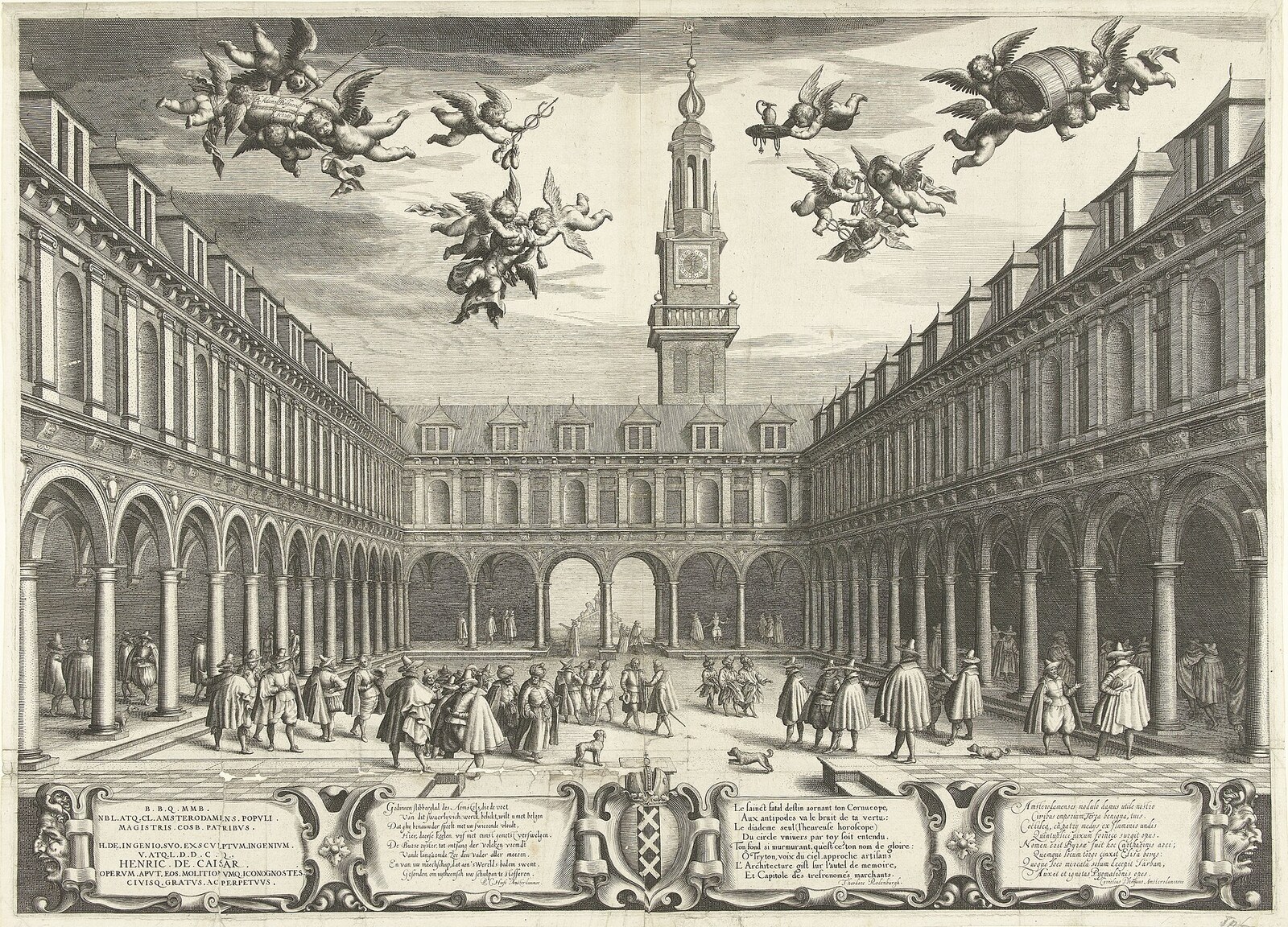
In the summer of 1602 a new company opened its books in Amsterdam and invited the public to buy a part of it. The States General had just forced the rival Dutch companies trading to Asia into a single body, the Vereenigde Oost-Indische Compagnie, and given it a monopoly of the trade for twenty-one years.1 Article 10 of its charter, as one modern translation renders it, read: “All the residents of these lands may buy shares in this Company.”2 They did. The Amsterdam chamber's subscription book carried 1,143 names. “One could subscribe in any amount wanted,” the historian Femme Gaastra notes, and eighty-four people put in ten thousand guilders or more.3 Among the smallest was Neeltgen Cornelis, a maid in the household of one of the company's founders, who subscribed a hundred guilders. In Enkhuizen, a smaller port on the Zuiderzee, 538 people subscribed, many of them craftsmen.4 The company raised about 6.4 million guilders, and the modern history of asking strangers for money had begun.
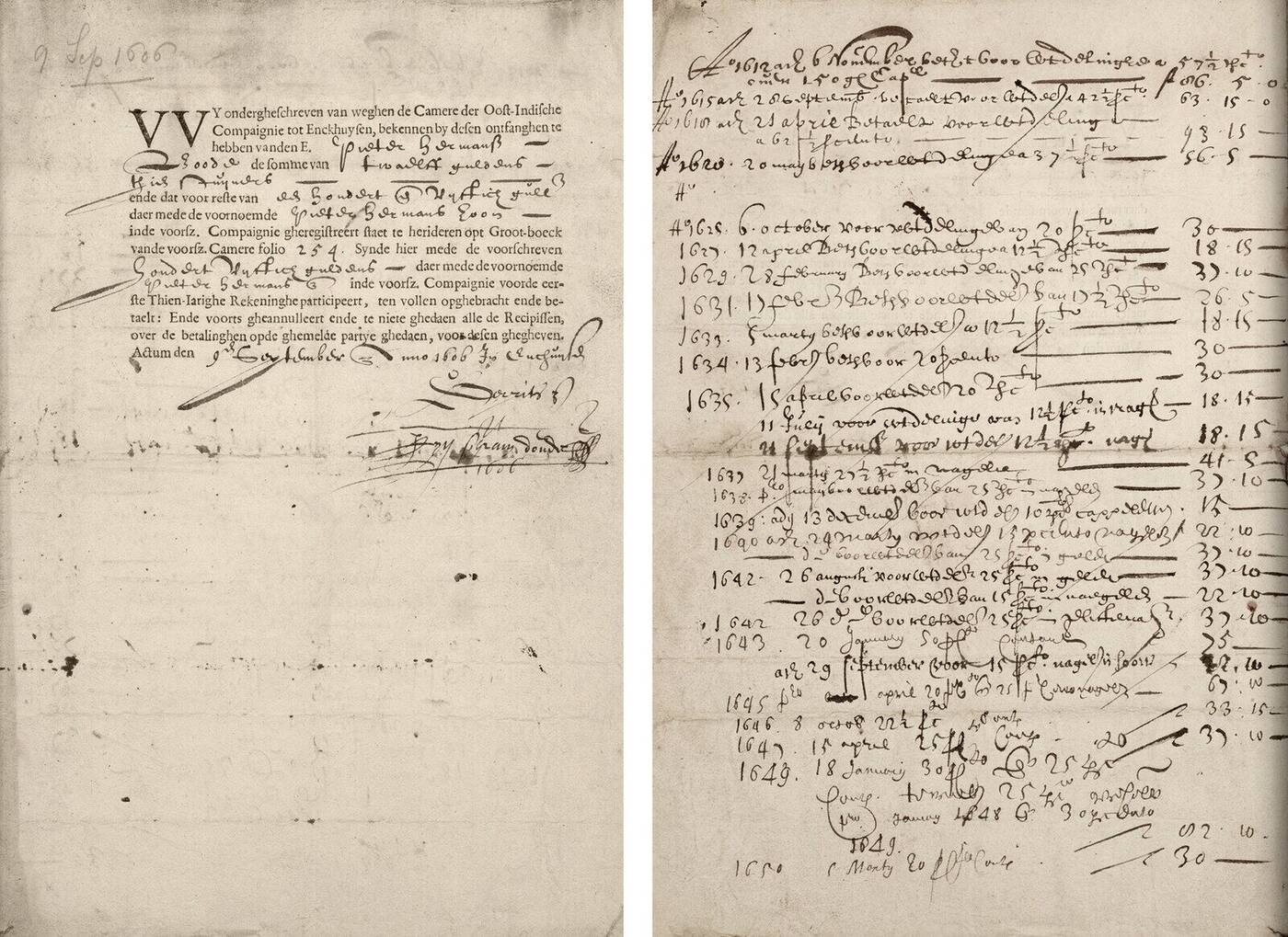
It is worth pausing on what had been possible before. Hans Holbein painted, in 1532, a portrait of a German merchant named Georg Gisze in his counting house at the Steelyard in London.5 Gisze stands among the instruments of his trade: a pair of scales, a box of coins, his seals, a ball of string, and letters, dozens of letters, pinned to the walls and stacked on the shelves. He is opening one now. The letters are his capital as much as the coins are. They are the record of who owes him, who trusts him and who he trusts, a web of credit spun one correspondent at a time. A merchant of Gisze's kind raised money from people who knew him, or who knew someone who did, and the limit of his business was the limit of his correspondence.
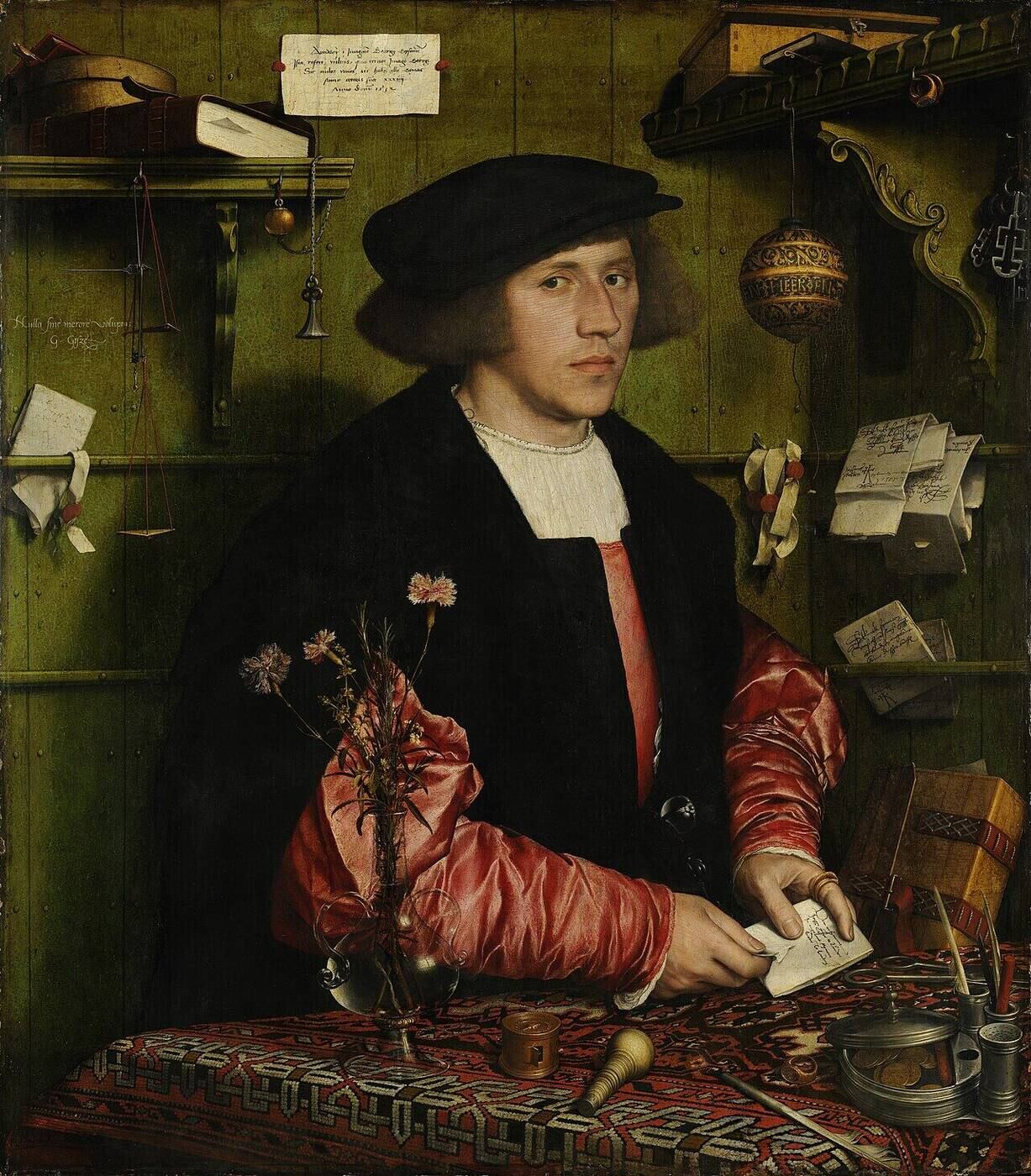
Shakespeare's Venice, sixty years later, works the same way, and The Merchant of Venice is among other things a play about a financing.6 Antonio's wealth is all at sea at once, in argosies bound for Tripolis, the Indies, Mexico and England, and so when his friend needs three thousand ducats he must borrow them, on his own name, from a man who dislikes him. Shylock's appraisal of the risk is the epigraph to this essay. Ships are but boards. A single merchant who puts everything into a few voyages is one storm from ruin, and his lender knows it.
The Dutch answer to Antonio's problem was to turn it inside out. Instead of one man owning many voyages, many people would each own a small part of a whole fleet, and no single wreck could ruin any of them. That is the idea that Neeltgen Cornelis bought with her hundred guilders, and three features of the first great public raise have never changed since. The first is that it was sold on a story about the future. Nobody in 1602 could see the profits of voyages that had not yet sailed; subscribers bought an argument, that a single company with a monopoly would bring back pepper and nutmeg more profitably than six competing ones. The second is that the money was not taken at once. Subscribers paid in four instalments, the last of them in 1606 only 8.3% of the capital, because the founders expected the first returning fleets to pay for the rest. The capital was, in the words of three modern historians, “a revolving fund to be replenished from sales revenues”.1 The first great raise was staged to the company's need, as a well-made raise still is. And the third is that ownership concentrated. Within ten years the 1,143 Amsterdam shareholders had become 840, and by 1725 they were 426.3 Dividends were low and irregular, and the small holders sold to the large. The people who could wait bought from the people who could not.
IIThe projecting age
A century later, in London, the instinct that had built the Dutch company went wrong. Daniel Defoe, writing in 1697, called his own era “the Projecting Age”, and the name stuck.7 A projector was a man with a scheme and a prospectus: for draining fens, diving for wrecks, insuring ships, lending to the poor, or making salt water fresh. Defoe was one himself, and went bankrupt doing it. Jonathan Swift, who disliked the type, gave them their most lasting monument in the third voyage of Gulliver's Travels. There the Academy of Lagado employs a projector who “had been eight years upon a project for extracting sunbeams out of cucumbers, which were to be put in phials hermetically sealed, and let out to warm the air in raw inclement summers”.8 Like most satire, Swift's was barely an exaggeration.
The great project of the age was the South Sea Company, founded in 1711 to take over a large part of the government's debt in exchange for the right to trade with Spanish America. The trade never amounted to much. The debt conversion did. In 1720 the company's shares rose from £128 in January to about £1,050 in June and fell to £175 by September.9 Amsterdam and Paris had their own manias that year, and modern research on the prices suggests that investors were speculating on real hopes for Atlantic trade and the new insurance companies as well as on one another.10 But the year is remembered for its lesser projects, and for one in particular. Charles Mackay, writing more than a century later, told of a promoter who advertised “a company for carrying on an undertaking of great advantage, but nobody to know what it is”, collected deposits from a crowd of subscribers in a single morning, and left that afternoon for the Continent, never to be heard of again.11 Modern historians doubt that the company existed. That the story has been retold for two hundred years regardless is a small lesson of its own.
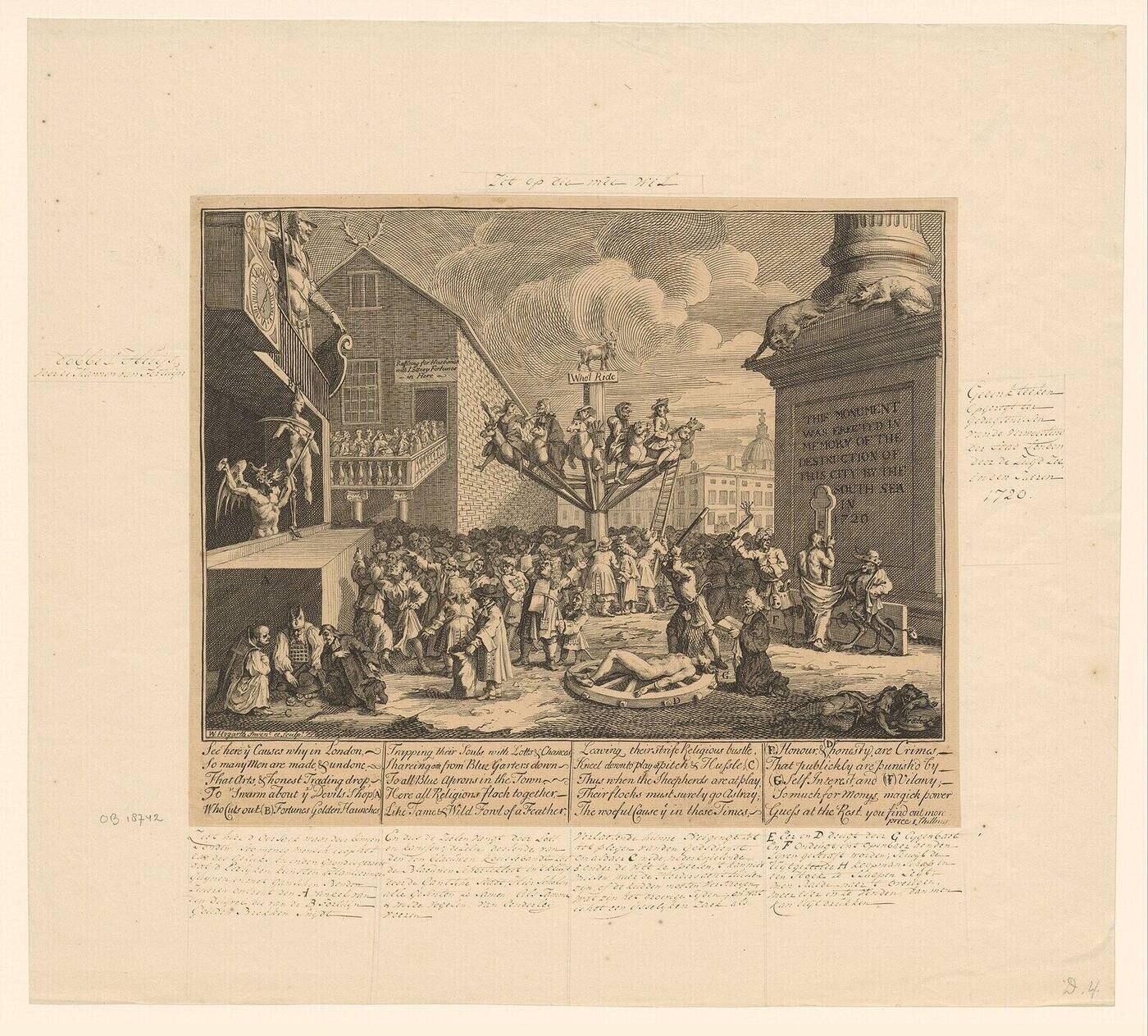
Alexander Pope gave the episode its verdict in verse. “Blest paper-credit! last and best supply!” he wrote in 1733, in an epistle on the use of riches, “That lends Corruption lighter wings to fly!”12 Pope's complaint was not that money had been lost, though a great deal had. It was that money had become light. A fortune that had once been land or gold or a warehouse of cloth could now be a piece of paper, carried in a pocket and sold in an alley, and the thing it stood for could be anything at all, including nothing. Isaac Newton is supposed to have lost twenty thousand pounds in the bubble and to have said that he could calculate the motions of the heavenly bodies but not the madness of people. The sentence is probably apocryphal, and its survival, like that of Mackay's anonymous company, says more about the story's usefulness than its truth.13
Parliament's response had begun before the crash. In June 1720 it passed what became known as the Bubble Act, which forbade any undertaking to raise money from the public through transferable shares without a royal charter or an Act of Parliament.14 For more than a century afterwards, until its repeal in 1825, the English joint-stock company was a privilege rather than a right. This is the first lesson the history teaches, and it is taught again at every turn. After each excess comes a rule, and the rule is almost always about who may be asked.
IIIOther people's money
Adam Smith, writing in 1776, set down the objection that has followed the joint-stock company ever since. “The directors of such companies,” he wrote, “being the managers rather of other people's money than of their own, it cannot well be expected, that they should watch over it with the same anxious vigilance with which the partners in a private copartnery frequently watch over their own.”15 Negligence and profusion, he concluded, must always prevail more or less in the management of such a company. Smith's objection is the founding text of what economists now call the agency problem, and it is also, read the other way round, the founding text of the investor's suspicion. Anyone who asks for other people's money is presumed, until shown otherwise, to care less for it than for their own.
The nineteenth century tested the suspicion thoroughly. Walter Bagehot, editor of The Economist, described credit in 1873 as “the disposition of one man to trust another”, and observed that it was “singularly varying”: abundant in one season, and in the next nowhere to be found.16 Two years later Anthony Trollope published The Way We Live Now, whose financier, Augustus Melmotte, floats a railway from Salt Lake City to Vera Cruz whose chief product is its own shares.17 Melmotte is vulgar and of uncertain origin, and he is elected to Parliament for Westminster. London society despises him and dines at his table, because it cannot afford not to. When the shares collapse he forges a signature, drinks a bottle of brandy and poisons himself. Trollope did not need to invent much. The railway manias of the 1840s and 1860s had given him the material, and the City had given him the models.
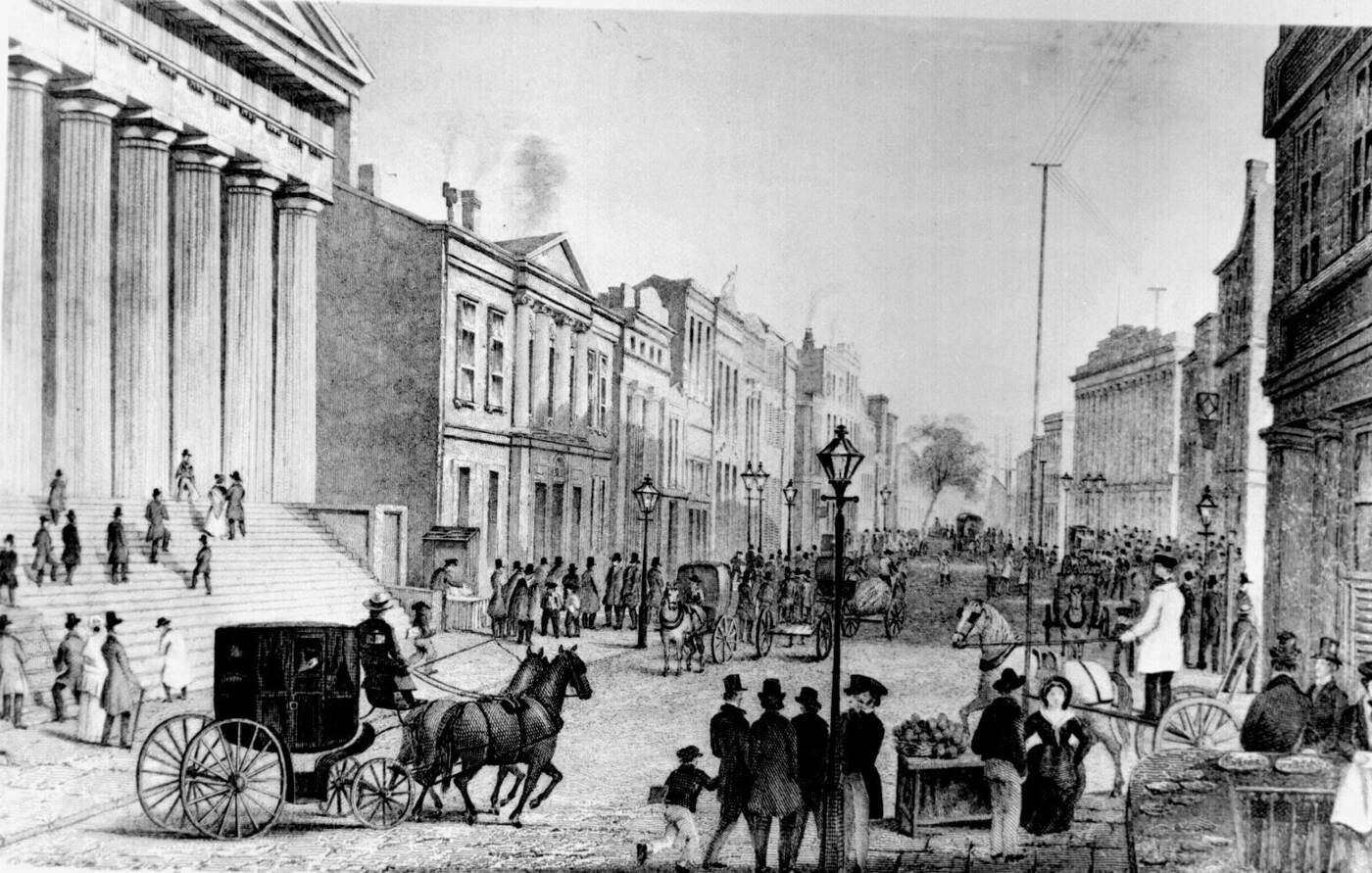
The modern private market was born out of the next great disappointment, in Washington in 1933. Louis Brandeis had written twenty years before, in a book whose title borrowed Smith's phrase, that “sunlight is said to be the best of disinfectants; electric light the most efficient policeman”.18 Franklin Roosevelt took the remedy and wrote it into law. He sent Congress a securities bill in March 1933, proposing to add to the ancient rule of caveat emptor “the further doctrine ‘let the seller also beware’”.19 The Securities Act, signed in May after the Senate's counsel Ferdinand Pecora had spent months extracting confessions from the most celebrated bankers in the country, required any company selling securities to the public to register them and publish a prospectus.20
But the Act also contained, from the beginning, an exemption for “transactions by an issuer not involving any public offering”. Those nine words, now section 4(a)(2), are the legal foundation of nearly every private raise in the United States, and what they meant was settled, improbably, by a company that made animal feed. Between 1947 and 1951 Ralston Purina sold nearly $2m of its own stock to its employees without registering it, among them a bake-shop foreman, a stenographer and a veterinarian. The SEC sued, and in 1953 the Supreme Court agreed with it. The test, the Court said, was “whether the particular class of persons affected needs the protection of the Act. An offering to those who are shown to be able to fend for themselves is a transaction ‘not involving any public offering.’” It declined to set a number, and on the meaning of “the public” it quoted an English judge: “Anything from two to infinity may serve.”21
Every rule about raising money is, in the end, a rule about who may be asked.
From that day the private market was defined not by its size, nor by its instruments, but by its audience. A company could raise as much as it liked, from as many people as it liked, so long as those people could look after themselves. The question every private raise has had to answer since is who those people are and how to reach them, which is the question Gisze answered with his letters and the Dutch company answered with a subscription book open to anyone in the street.
IVThe thought-out risk
For the next thirty years the answer was mostly rich families and a few brave institutions. The most famous exception began in Boston in 1946, when Georges Doriot, a Harvard professor who had spent the war as a brigadier general running the Army's research into soldiers' equipment, founded American Research and Development. It was the first venture capital firm to raise its money from institutions and the public rather than from a family.
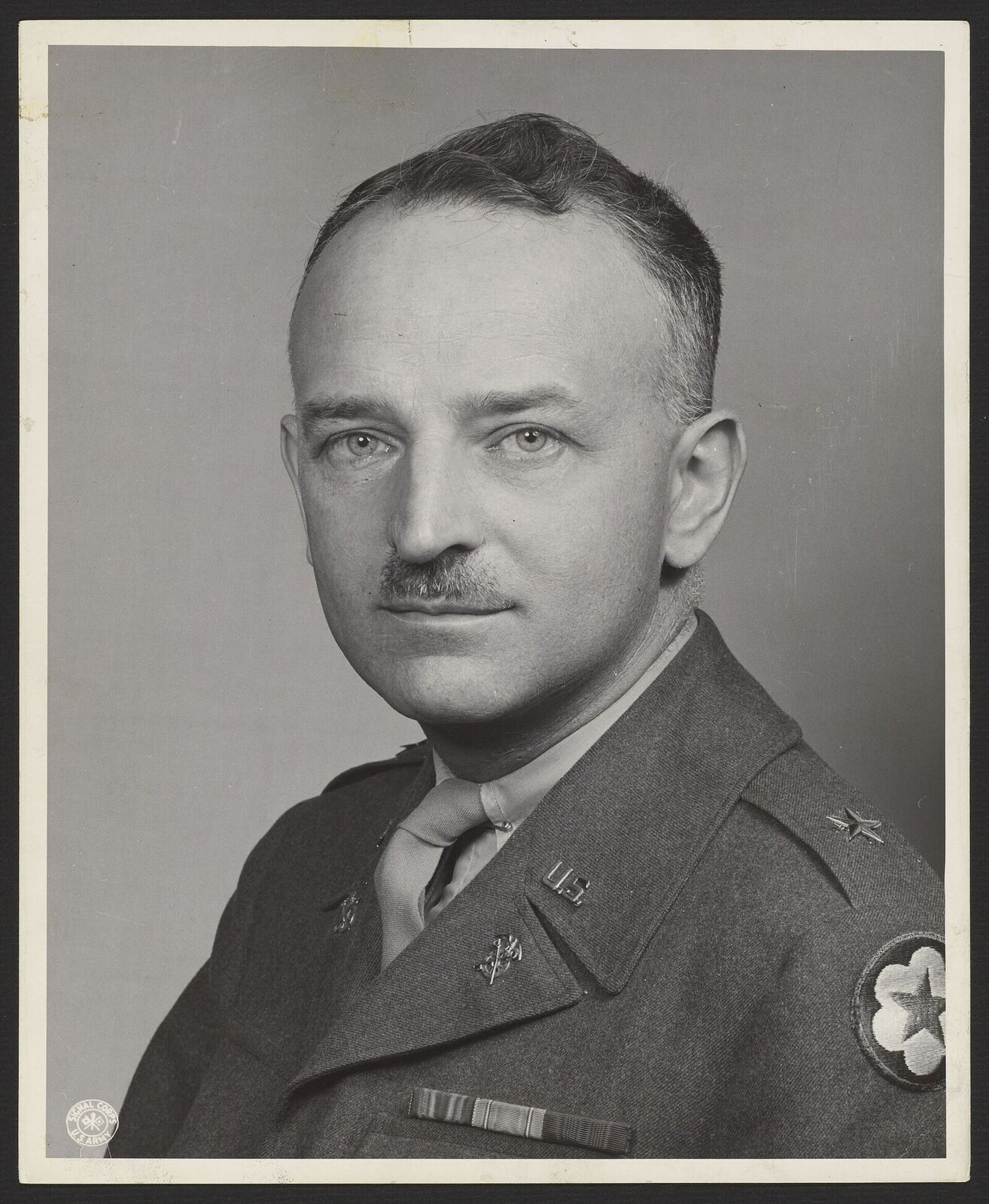
In 1957 ARD invested $70,000 for 70% of a company started by two engineers, Ken Olsen and Harlan Anderson, in a corner of an old woollen mill in Maynard, Massachusetts. They had been warned that money for a “computer” company would be hard to find, so they called it Digital Equipment Corporation.22 Doriot explained his reasoning in a sentence that every venture investor has since tried to live up to: “Ken was taking a risk, but it was a thought-out risk, the kind of risk I favor.” The $70,000 grew to $355m. From 1946 to 1971 ARD returned 15.8% a year; without Digital it would have returned 7.4%.23 Paul Gompers and Josh Lerner later found that almost half of ARD's profits over its twenty-six years came from that single investment.24
The arithmetic still governs venture capital, and it governs how venture capital is asked for. A fund lives or dies on one or two investments in twenty, so each investment must be argued as though it could be the one that returns the fund. A founder pitching a venture investor is not, in truth, asking whether the business will be good. That question interests the investor much less than the founder supposes. They are asking whether it could be Digital, and the pitch that wins is the one that makes the investor believe, for the length of a meeting and the walk to the partners' room, that it could.
VUnhistoric acts
George Eliot ended Middlemarch with the observation that “the growing good of the world is partly dependent on unhistoric acts”, and the remark applies, a little absurdly, to the modern private market.25 It was built in four years, between 1979 and 1982, by changes that almost nobody outside the industry noticed.
In June 1979 the Department of Labor clarified that a pension fund's managers could judge the prudence of an investment by its place in the whole portfolio rather than on its own. A department official said that the securities of a small or new company, though riskier than a blue chip's, could be “entirely proper under ERISA's prudence rule”.26 Pension funds' share of the money committed to independent venture funds rose from 15% in 1978 to half by 1986, and total commitments, in 1994 dollars, from $427m in 1978 to $5.5bn in 1983.24 In October 1980 Jimmy Carter signed the Small Business Investment Incentive Act, calling the raising of capital the most difficult task a small business faces.27 Among other things it created the business development company, the vehicle through which much of today's private credit is held and the only one obliged to publish its loans. And in March 1982 the SEC adopted Regulation D, which turned the Supreme Court's test into rules. Rule 506 let a company raise any amount from any number of “accredited” investors, defined by their wealth or income, and from a limited number of others. The SEC later estimated that about 1.87% of American households qualified at the time.28 Every raise under the new rules was to be reported on a single short notice, Form D, and by 2010 the money raised under Regulation D exceeded the money raised in registered debt offerings.29
None of these changes made a headline, and together they did something the Securities Act had not. The Act had decided who must be told everything. Regulation D decided who could be told less. It drew, for the first time, a clear line around the audience a private company could ask, and it drew the line by wealth. The rules said nothing at all about how to persuade the people inside it.
VIMasters of the universe
The 1980s added a second way of raising private money at scale, which was to sell debt to investors who would take more risk for more return. New issues of high-yield bonds rose from $1.5bn in 1982 to $15bn in 1984, and in those years Drexel Burnham Lambert underwrote, in the Federal Reserve Bank of Cleveland's words, “virtually 100 percent” of them.30 Its idea, which belonged chiefly to Michael Milken, was that the debt of middle-sized companies which had depended on their banks could be sold directly to insurers, savings banks and funds, and that the extra yield would more than pay for the extra defaults. It was a good idea, and it was ruined by the uses to which it was put.
Tom Wolfe gave the decade its emblem in The Bonfire of the Vanities, whose bond salesman thinks of himself as a Master of the Universe.31 The money financed buyouts on a scale not seen before. In 1989 Kohlberg Kravis Roberts completed the purchase of RJR Nabisco for $25bn, “the biggest deal the United States has ever seen”, the Christian Science Monitor called it.32 Within a year Drexel was bankrupt, and Milken had pleaded guilty to six felonies and agreed to pay $600m.33
Polonius had warned his son against both borrowing and lending, on the grounds that a loan “oft loses both itself and friend”. The 1980s proved him half right. Friends were lost in great numbers; the loans, on the whole, were not. The market Drexel built outlived it. Two weeks after Milken's plea the SEC's Rule 144A took effect, allowing institutions with at least $100m of securities to trade unregistered securities freely among themselves.34 Private debt had become a market of its own, with its own audience, and the line around that audience was again drawn by size.
VIIGradually, then suddenly
On 16 December 2008 the Federal Reserve cut its target rate to between zero and a quarter of one percent.35 It stayed near zero for most of the next thirteen years, and three things followed. Banks, under new capital rules after the crisis, lent less to riskier companies, and funds took their place. Whether the rules caused the shift is argued even within the Federal Reserve, but the result is not.36 The IMF estimated private credit at $2.1tn worldwide in 2023, about three quarters of it in the United States.37 In Britain, the Bank of England observed that almost all of the roughly £425bn net increase in lending to businesses between 2008 and 2023 had come from outside the banks.38 The lender of the age is no longer a bank, as it was for Bagehot. It is a fund, raising its own money from pensions and insurers and lending it on terms that are agreed in private and recorded, if at all, in a schedule of investments filed with the SEC.
The rules on who could be asked loosened as money became cheap. In April 2012 Barack Obama signed the JOBS Act, which told the SEC to let companies advertise private raises to accredited investors. Ordinary Americans, he said, would “be able to go online and invest in entrepreneurs that they believe in”.39 The door that the Bubble Act had shut in 1720 and the Supreme Court had held half open in 1953 was propped wide. Advertised raises have doubled as a share of the whole since. On the record we have read, they sell in full a third as often as the rest, which suggests that a wider audience is not the same thing as a willing one. And cheap money produced, as it always does, its own projectors. Special purpose acquisition companies, shells listed on an exchange in order to buy a private company yet to be chosen, raised $75bn in 248 listings in 2020 and $145bn in 613 in 2021. In 2023 there were 31.40 Mackay's company “for carrying on an undertaking of great advantage, but nobody to know what it is” had at last found its legal form.
“How did you go bankrupt?” a character asks in Hemingway's The Sun Also Rises. “Two ways,” comes the answer. “Gradually and then suddenly.”41 The end of cheap money came the same way. On 16 March 2022 the Federal Reserve raised its rate for the first time in more than three years, and by July 2023 it stood between 5.25% and 5.5%.35 Every loan agreed in the long years of zero would have to be refinanced at the new price, and every equity valuation struck on the old arithmetic would have to be struck again. Mr Micawber had stated the principle in 1850: “Annual income twenty pounds, annual expenditure nineteen nineteen and six, result happiness. Annual income twenty pounds, annual expenditure twenty pounds ought and six, result misery.”42 A company whose interest bill doubles has crossed Micawber's line without changing anything it does, and the private market went back to work in the way it had worked for most of its history: slowly, with fewer investors writing larger cheques, after longer looks.
VIIIWhat has not changed
Look back over the four centuries and two things change at every turning point. The first is who may be asked. It was anyone Georg Gisze could write to, and then anyone in Amsterdam with a hundred guilders; then only those with a charter from the Crown; then those “able to fend for themselves”; then accredited investors, pension funds, institutions with $100m, and anyone with an internet connection and enough income. Each rule was written after an excess, and each redrew the line around the audience. The second is the instrument: a share in a fleet, a bond, a venture stake, a high-yield note, a unitranche loan from a fund, each invented to reach a new audience or to satisfy an old one in a new way.
What does not change is the act itself. In 1602 and in 2026, a person with a plan asks another person with money to believe something about the future, on evidence that is never complete. Every rule in this history has been an attempt to replace the knowledge that Gisze had of his correspondents, and Shylock had of Antonio, with a category: chartered, registered, accredited, qualified, institutional. The categories decide who may be asked. They have never once decided who will say yes. That is still settled the way Shylock settled it, by an investor who listens to the story, asks whether the man is “good” in the lender's sense of being sufficient, and then goes down to the Rialto to hear what the ships are doing.
Neeltgen Cornelis's hundred guilders and a pension fund's hundred million dollars were committed for the same reason. Someone made an argument about the future that was clear enough to believe and careful enough to check. The rules decide who is in the room. The argument decides who writes the cheque.
Works cited
- Bagehot, Walter. Lombard Street: A Description of the Money Market. London: Henry S. King, 1873.
- Brandeis, Louis D. Other People's Money and How the Bankers Use It. New York: Frederick A. Stokes, 1914.
- Burrough, Bryan, and John Helyar. Barbarians at the Gate: The Fall of RJR Nabisco. New York: Harper and Row, 1989.
- Defoe, Daniel. An Essay upon Projects. London, 1697.
- Dickens, Charles. David Copperfield. London: Bradbury and Evans, 1850.
- Eliot, George. Middlemarch. Edinburgh: William Blackwood, 1871 to 1872.
- Frehen, Peter, William N. Goetzmann and K. Geert Rouwenhorst. “New Evidence on the First Financial Bubble.” NBER Working Paper 15332, 2009.
- Gaastra, Femme S. “The Amsterdam Capital Market and the Dutch East India Company.” KNAW Digital Library.
- Gelderblom, Oscar, Abe de Jong and Joost Jonker. “The Formative Years of the Modern Corporation: The Dutch East India Company VOC, 1602 to 1623.” Erasmus University Rotterdam, 2012.
- Gompers, Paul, and Josh Lerner. “What Drives Venture Capital Fundraising?” NBER Working Paper 6906, 1999.
- Hemingway, Ernest. The Sun Also Rises. New York: Scribner, 1926.
- International Monetary Fund. Global Financial Stability Report, April 2024.
- Ivanov, Vladimir, and Scott Bauguess. “Capital Raising in the U.S.: The Significance of Unregistered Offerings Using the Regulation D Exemption.” US Securities and Exchange Commission, 2012.
- Mackay, Charles. Memoirs of Extraordinary Popular Delusions. London: Richard Bentley, 1841.
- Pope, Alexander. Epistle to Bathurst. London, 1733.
- Securities and Exchange Commission v. Ralston Purina Co., 346 U.S. 119 (1953).
- Shakespeare, William. The Merchant of Venice. About 1597.
- Smith, Adam. An Inquiry into the Nature and Causes of the Wealth of Nations. London: W. Strahan and T. Cadell, 1776.
- Swift, Jonathan. Gulliver's Travels. London: Benjamin Motte, 1726.
- Trollope, Anthony. The Way We Live Now. London: Chapman and Hall, 1875.
- Wolfe, Tom. The Bonfire of the Vanities. New York: Farrar, Straus and Giroux, 1987.
Cite as: “A short history of asking for money”, Norvian Review, 29 October 2026.