
- Skylight, a Los Angeles maker of digital photo frames and family calendars founded in 2014, has sold no equity on record. It calls itself bootstrapped.
- It borrowed $15m from SG Credit Partners in August 2023. The facility grew to $20m, then to $50m in April 2025 with Wingspire Capital alongside, and to $75m in September 2026.
- Each step paid for stock or new products. Its chief executive puts the cost of goods at "like 50%", and the stock must be bought before Christmas.
- The chief executive, Michael Segal, says there were times it paid "15 to 20% annualized", and that its profits made that the better choice.
- On our arithmetic, debt at 20% a year costs less than equity whenever the company's value grows faster than 20% a year. Skylight reported 99% revenue growth in April 2025 and said in 2026 that the business had doubled.
- The rate, fees, maturity, security, covenants and the split between the two lenders are not public.
Christmas has to be paid for before it arrives
Skylight sells touch-screen photo frames and family calendars. Customers "pay 300 to $700 for a device and then you pay 80 bucks a year", in the words of its chief executive, Michael Segal.6 The device is where the cash goes. "Our cost of goods is like 50%," he said in February 2026.6
That makes the business hungry for working capital at one time of year. "You need working capital to buy all of your units before Christmas. That's really hard," Segal said. The stock has to be bought "weeks in advance for it to be produced, shipped over". Meanwhile "you could be at zero cash in the bank and then millions the next day, if the next day is Black Friday."6
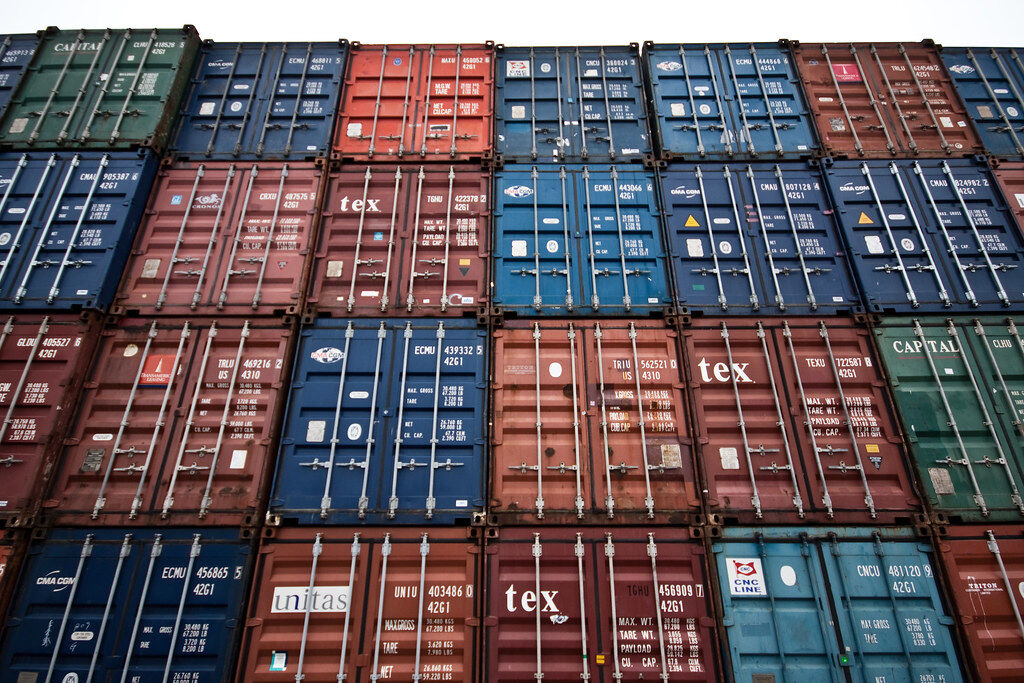
The usual answer for a growing consumer brand is to sell shares. Segal knew that route well: before Skylight he was a vice president at Bessemer Venture Partners.7 His chief product officer, Mark Ungerer, described what equity would have paid for. "If we'd raise funding, I can imagine the $100 million check hits the bank, and it's like drop the prices and get to three times as many households."6 Skylight borrowed instead.
The company
Skylight was founded in 2014, according to the company.1 Its founders "first came together as students at Harvard Business School", and its About Us page is signed by Ricardo, Michael and Jake.8 Segal is founder and chief executive.1 The surnames of the other two co-founders are not in the sources we read.
The first outside money was a Kickstarter campaign, which sells products in advance and gives away no shares. In March 2015 it was "seeking $30,000" and had raised just over $28,000 with 12 days to go.9 The company says it ended at $55K.8 Segal has said "it took 3 more years before we figured out a business model that allowed us to build a big business".7
The calendar arrived on 14 September 2020 as "the second product offering from the brand".10 In August 2023 the company reported "over 5 million total users" and called the Frame "the top selling digital picture frame on Amazon".1 By September 2026 it reached "more than 12 million customers, including 1.7 million households using Skylight Calendar".3 The company mixes users and customers, so these figures are not strictly comparable.
Software matters more than its size suggests. Segal said software "might be, I don't know, 10 to 20% of our revenue, but it is half of the profit."6 Ungerer said the subscription price had been doubled to $79, and named Costco and Best Buy as retail partners.6
In September 2026 the company said it "has remained bootstrapped".3 Segal said on the podcast that Skylight was neither trying to sell nor owned by private equity.6 Revenue, profit, headcount and the founders' holdings are not public.
The financing
The money came in four steps, from the same lead lender each time. Nine years of the company's life passed before the first of them.
On 1 August 2023 SG Credit Partners announced "a Senior Debt Investment in Skylight Frames" of $15m, made through its division SG Consumer Products.1 The money was "to support inventory purchases and ensure sufficient product stock to meet increasing demand". Segal said: "We've bootstrapped profitably for nearly a decade, and this new financing will help us continue to be aggressive in scaling our business."1
The second step is known only from the third. By April 2025 SG had "previously provided a $20 million facility to Skylight".2 We could not find the date of the increase from $15m.
On 3 April 2025 Skylight "secured a $50 million loan through an expanded partnership with SG Credit Partners and new partner Wingspire Capital".2 The release says SG "has increased its commitment to $50 million and brought in Wingspire Capital as a strategic financing partner". It does not say how much of the $50m each lender provides.
The 2025 money "will fund inventory purchases, enabling Skylight to scale with consumer demand while continuing to invent new products".2 The same release cited "99% year-over-year revenue growth".
On 30 September 2026 Skylight "expanded its credit facility to $75 million. The $25 million increase comes from SG Credit Partners alongside Wingspire Capital".3 This time the purpose moved beyond stock. The money is to "help Skylight widen its product lineup and move into more channels and markets". Named uses are a routine coach for children and "Deeper investment in the AI-powered family assistant you can text".3
| August 2023 | September 2026 | |
|---|---|---|
| Size | $15m | $75m |
| Lenders | SG Credit Partners, through SG Consumer Products | SG Credit Partners and Wingspire Capital |
| Described as | Senior debt | Credit facility |
| Purpose | Inventory purchases | A wider product lineup, more channels and markets |
| Split between lenders | One lender | Not public |
| Rate | Not public; 15 to 20% at times, by Segal's account | Not public; 15 to 20% at times, by Segal's account |
| Maturity, security, covenants | Not public | Not public |
| Advisers named | None | None |
ABF Journal and Dealroom reported the same $75m total and $25m increase.4,5 Dealroom wrote that "Wingspire Capital joins the expanded facility", but Wingspire had joined in April 2025.2 We follow the company's release. No debt adviser, corporate finance adviser or law firm is named in any of the announcements or the trade coverage.
The structure
The loan documents are private, so the structure has to be read from the releases. In 2023 it was "senior debt". In 2025 the release said "loan", "loan facility" and "credit facility". In 2026 it said "credit facility".1,2,3 Whether the facility revolves, amortises or is lent against a borrowing base is not disclosed.
The two lenders are different kinds of business. SG Credit Partners described itself in 2023 as "a family-office backed lender providing capital to lower middle market businesses and entrepreneurs requiring tailored credit solutions".1 By 2026 it called itself "a national private credit manager", with three verticals, one of them consumer products.3
SG's chief executive, Marc Cole, has explained whom it lends to. "We mostly target the non-sponsored businesses as we understand the family-owned business mindset and needs."11 A founder-owned company with no private equity owner is the borrower that sentence describes.
Wingspire Capital is an Atlanta asset-based lender, now "a portfolio company of Blue Owl Capital Corporation (NYSE: OBDC)".12,3 In January 2026 it reported "just under $3 billion in capital commitments and approximately $1.6 billion in loans outstanding".14
At its launch Wingspire said its loans "will be secured by assets such as accounts receivable, inventory, equipment, real estate and intellectual property".12 That describes its business in general. What Skylight pledged is not public.
The sizes do not fit SG on its own. SG has called deals of "between $2 million to $7 million" its "real sweet spot".11 Wingspire's range is $20m to $200m.12 Our reading is that either Wingspire holds a large share of the $75m, or Skylight is an unusually large position for SG. The split has not been published.
The numbers
The one price on record comes from Segal. "There were times when we paid 15 to 20% annualized, but it made sense when you do our profit numbers to do that, instead of raising equity. We could afford it."6 He did not say which lender or which period he meant.
On our arithmetic, $75m fully drawn for a year at 15% to 20% would cost $11.25m to $15m of interest. That is a ceiling, because the amount drawn at any time is not public.
A cost of goods "like 50%" leaves a gross margin of about half, on our arithmetic. Software brings in 10 to 20% of revenue and half the profit.6 We think that recurring income is part of what made the interest affordable.
The figure that matters most to a lender is the one Segal gives about payback. "Every single order in the company's history, has paid back on day zero. There's no marketing acquisition cost, which means you don't have to go convince a bunch of VCs to give you $20 million just to grow."6
A loan against stock is repaid when the stock sells. If each sale covers its cost on the day it is made, the lender does not wait years for a customer to turn profitable. That is our reading of why the model suits debt.
Debt at 20% costs less than equity for as long as the company's value grows faster than 20% a year.
Why it worked
The lenders said what they saw. In 2023 Dan McCallum of SG called Skylight "a resilient, direct-to-consumer electronics brand, which makes the company an ideal fit with our investment philosophy of supporting exceptional consumer brands".1 In 2026 Wingspire's Will Bence said: "It's rare to find a company growing this fast and this profitably, and we're glad to be along for what comes next."3
SG came back three times, and Segal describes that relationship as the point of the exercise. "It's finding that really good relationship with somebody who gets what you're doing and is willing to charge more for a little bit more risky debt, basically."6
The lenders also had money to place. Wingspire said it "doubled its total fundings in 2025 compared to the prior year". Its chief executive said this came "despite a challenging year for asset-based lending and equipment finance".14 It had passed $1bn of commitments in January 2022, "in just its second year of operations".13
- A history of profit
- "Bootstrapped profitably for nearly a decade" before the first loan.
- Sales repay the stock
- "Every single order in the company's history, has paid back on day zero."
- Income beyond the device
- Software is 10 to 20% of revenue and half the profit.
- Named places it sells
- Amazon, Costco and Best Buy.
- Growth with profit
- 99% revenue growth reported in April 2025; the business doubled again.
- Stock a lender could sell
- Connected devices, Segal says, "we can't even sell" if things go wrong.
On the threat of tariffs in 2025, Ungerer said: "When there was a moment where Vietnam was going to get crushed, we were not sweating bullets."6
What happened next
After the April 2025 loan the company had "Skylight's biggest year yet: the business doubled".3 It reached more than 12 million customers and 1.7 million Calendar households. The facility rose to $75m in September 2026. The children's routine coach "sold out within a week of launch".3 We found no equity round, acquisition, sale process or default.
Money that does not dilute comes in other forms. In May 2025 Grammarly took a $1bn commitment from General Catalyst's Customer Value Fund. "Grammarly will repay the capital along with a fixed, capped percentage of revenue."15 Grammarly, unlike Skylight, had raised venture equity before.
The first outside money came from Kickstarter backers buying frames in advance. It raised $55K and gave away no shares.
The first $15m paid for inventory. Segal says every order paid back on day zero. On our reading, the loan is repaid as the stock sells.
SG calls $2m to $7m its sweet spot; Wingspire lends $20m to $200m. SG brought Wingspire in at the $50m step.
The podcast's summary says the push to scale the Calendar in 2021 and 2022 led to "wasted marketing spend". Growth bought ahead of sales is the kind a lender will not fund.
Segal says the debt cost 15 to 20% a year at times. Fully drawn, $75m at those rates would cost $11.25m to $15m a year, on our arithmetic.
At 20%, two years of interest on $50m is $22m. A stake sold in a company doubling each year would cost $150m. In one growing 10% a year it would cost $10.5m.
What we do not know
- The rate at each step, the fees and any warrants. Which loans cost 15 to 20%, and when.
- The maturity, repayment, and whether the facility revolves or is lent against a borrowing base.
- The security, the covenants and any personal guarantees.
- How the $50m and $75m are split between SG and Wingspire, and whether they lend under one agreement.
- The date the facility reached $20m.
- Revenue, profit and cash flow in dollars, and how much of the facility has been drawn.
- The founders' shareholdings, and whether any angel equity was ever issued.
- The borrower's legal name and any security filings, which we did not check.
What a founder can take from it
The question founders ask us most is whether they can fund growth with debt instead of selling equity, and what the debt will cost and constrain. Skylight is one answer, with a price attached.
The cost of debt against the dilution avoided
This is our arithmetic. Sell a stake for $50m and you give up that share of whatever the company becomes. If the company's value multiplies by g over the period, the stake ends up worth $50m times g. Borrow $50m at a rate r and you repay $50m compounded at r for each year of the loan.
So debt is cheaper whenever the company's value grows faster than the interest rate. The price paid for the equity does not change that answer.
Take Skylight's upper rate. At 20% for two years, $50m becomes $72m: $22m of interest. Now suppose the company's value doubled each year, in line with the growth Skylight reported. A stake sold for $50m in April 2025 would be worth about $200m after two years.
On those assumptions the interest costs $22m, and the stake would cost $150m more than the cash it brought in. Debt at 20% is the cheap money.
Run the same sum for a company growing 10% a year. Over two years its value rises 21%, so a $50m stake costs $10.5m more than the money raised. Debt at 20% still costs $22m. For that company, equity is the cheaper money.
The arithmetic leaves out risk, and that is where equity earns its price. Interest is owed whether or not the year goes well; a shareholder shares a bad year. Segal put the lender's side of it plainly:
"What if you don't grow it all or you shrink, then we've lost all of our money and we're sitting on a bunch of inventory that, by the way, we can't even sell because it's connected device."6
What lenders need to see
The record of this case suggests five things.
- A history of profit: "bootstrapped profitably for nearly a decade".1
- Sales that repay the stock they consume: "paid back on day zero".6
- Named places where the product sells: Amazon, Costco and Best Buy.1,6
- Income that does not depend on stock. Subscriptions earn half Skylight's profit.6
- Growth and profit together, in Bence's words "this fast and this profitably".3
The constraints to expect
Skylight's covenants are not public. What the record shows is the shape of the limits.
- The pace is the lender's. Segal: "If we're like, we want to grow four X and we need this much money, well the problem is the bank is going to say, I'm not on board with that."6 Debt pays for growth a lender can see being repaid.
- Each step is a new negotiation. Skylight's facility was enlarged three times in a little over three years.1,2,3
- The assets will be pledged. Wingspire's stated practice is to secure loans on receivables, inventory, equipment, real estate and intellectual property.12
- The price is high. Segal described lenders willing "to charge more for a little bit more risky debt".6 His 15 to 20% is the only rate in this record.
Beyond the record, and in our view, a founder should also expect regular reporting on stock and sales. Expect limits on other borrowing and on payments to shareholders, and some test of liquidity or earnings. Ask about fees and warrants at the start, since Skylight's releases mention neither.
When it is the wrong choice
- When growth must be bought before it pays. Skylight's case rests on "no marketing acquisition cost". The podcast's summary says its push to scale the calendar in 2021 and 2022 led to "wasted marketing spend".6
- When the plan needs more than a lender will fund. Ungerer's "$100 million check" to cut prices and triple the household count was an equity plan.6
- When profits cannot carry the interest. Segal's condition was "We could afford it."6
- When the stock cannot be sold if things go wrong. Connected devices, in Segal's account, cannot.6
- When the company grows more slowly than its lender charges. The arithmetic above settles that one.
Segal's own summary was that he would "trade off gross margins all day long instead of selling a piece of the company".6 On the arithmetic, that trade pays for as long as the company grows faster than its lenders charge.
Method. Every figure comes from the announcements by Skylight and its lenders, the trade press reports listed, and published interviews with Skylight's officers. The podcast quotes are from the transcript published on the Sub Club website, which may be machine-generated; we reproduce them as published. All amounts are in US dollars as the sources give them, so no conversion was needed. The interest bill, the gross margin and the comparison of debt with equity are our arithmetic. They assume the facility fully drawn, yearly compounding and the growth rates shown, and are illustrations, not estimates of Skylight's costs. This case is written from public sources only.
“Debt at 20% costs less than equity for as long as the company's value grows faster than 20% a year.”
Sources
- SG Credit Partners Announces a Senior Debt Investment in Skylight Frames, SG Credit Partners (via Secured Finance Network), 1 August 2023
- Skylight Fuels Family-First Innovation with $50 Million of Financing From SG Credit Partners and Wingspire Capital, Skylight (via Secured Finance Network), 3 April 2025
- Skylight Expands Credit Facility to $75 Million to Help Families Share the Load Through Every Stage of Life, Skylight (via PR Newswire), 30 September 2026
- SG Credit and Wingspire Expand Skylight Credit Facility to $75MM, ABF Journal, September 2026
- Skylight adds $25M in debt, pushing credit facility to $75M, Dealroom News, 30 September 2026
- How Skylight Balances Growth and Profit for Sustainable Success: Michael Segal and Mark Ungerer, Skylight, Sub Club Podcast (RevenueCat), with published transcript, 18 February 2026
- Interview: Michael Segal, founder and CEO of Skylight, Adam Mendler (Thirty Minute Mentors), undated
- About us, Skylight, accessed 1 October 2026
- Skylight strives to be the most simple digital photo frame, Imaging Resource, 30 March 2015
- Skylight Launches Connected Home Calendar For Busy Families Just In Time for Fall, Skylight (via PR Newswire), 14 September 2020
- Stretching Out: SG Credit Partners Continues to Evolve from Cash Flow Lending Origins, ABF Journal, undated
- Wingspire Capital Launches Diversified Asset-Based Lending Platform, Secured Finance Network, undated
- Wingspire Capital Exceeds $1 Billion In Commitments After Just Two Years Of Operations, Secured Finance Network, 25 January 2022
- Wingspire Capital Announces $3 Billion in Capital Commitments and $1.6 Billion in AUM, Secured Finance Network, 6 January 2026
- Grammarly secures $1B in non-dilutive funding from General Catalyst, TechCrunch, 29 May 2025
Cite as: “Skylight: how a bootstrapped hardware company borrowed $75m instead of selling shares”, Norvian Review, 2 October 2026.