- Ocker Hill is a 99MW, two-hour battery being built near the site of a demolished coal power station between Dudley and Wednesbury.
- In May 2025 its owner, Eku Energy, closed a £37m term loan and £8.55m of ancillary facilities from NatWest and SMBC, about $60.6m in all, with a £100m uncommitted accordion for later UK projects.
- It was Eku's first UK debt financing. The battery's revenue was fixed at the same close by a ten-year tolling agreement with SmartestEnergy, a subsidiary of Marubeni.
- By March 2026 the project had £46.3m of assets under construction and £12.9m still to spend. On our arithmetic the term loan is about 62% of cost.
- The margin, tenor, cover ratios and toll price are not public. The structure, security and use of the money are.
The problem the toll solved
A battery on the British grid earns money in three ways. It buys power when it is cheap and sells it when it is dear. It is paid by the grid operator for services that keep the system stable. And it can hold a capacity contract that pays it to be available. Most of that income is set in markets that change from week to week.
In 2023 those markets fell hard. By January 2024 the average battery in Great Britain was earning about £36,000 a megawatt a year, according to Modo Energy. By December 2024 it had recovered to £84,000.11 A lender cannot size a loan on income that more than doubles or halves within a year. So most British batteries until then had been built with equity, or with debt sized on very cautious forecasts.
The answer the market found was the toll. A trader or utility pays the battery's owner a fixed fee for each megawatt, every year, and in return takes over the battery and keeps what it earns in the markets. The owner gets a predictable income. The trader gets a flexible asset it can run alongside its own book. In June 2024 Gresham House signed a two-year toll with Octopus that Modo estimated at about £56,000 a megawatt a year.12
The market figure more than doubled in eleven months. The toll's figure would not have moved at all.
Two years is too short to finance a construction project. Ten years is not.
The sponsor
Eku Energy was set up by Macquarie's Green Investment Group to build and run battery storage. In January 2023 the Canadian pension investor BCI agreed to buy into it.10 It is now owned by a Macquarie fund and BCI together, and NatWest describes it as having 4.6GWh of storage in development, construction and operation across the UK, Australia, Italy and Japan.3
Before Ocker Hill, Eku's British batteries were run by optimisers trading in the markets. None had UK project debt.3 Ocker Hill was its fourth UK project.1
The project company has a longer history than its sponsor's involvement. It was incorporated in May 2019 as JRB Generation Ltd by an individual developer. Eku's people became its directors in September 2022, and it was renamed Ocker Hill BESS Limited in March 2023.7 What Eku paid for the project is not public.
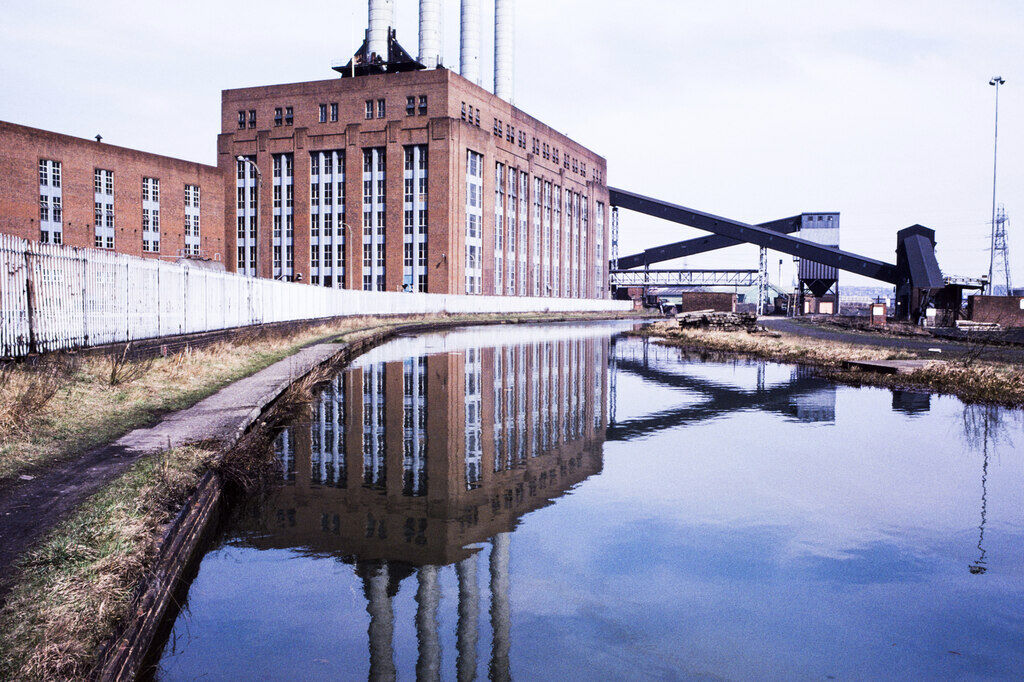
From an individual developer's company to financial close took six years. Most of the work that made the project bankable happened in the last of them.
The financing
Financial close came in May 2025. The project company's debenture is dated 8 May, and the facilities agreement and intercreditor deed are dated on or about the same day.7 Everything that makes a project bankable was signed together. There was the debt and the toll with SmartestEnergy. There were the battery supply contract with Tesla, the balance of plant contract with H&MV Engineering, and a 30-year lease of the land.1,8
NatWest's own case study gives the sizes. There is a £37m term loan, £8.55m of ancillary facilities and a £100m uncommitted accordion.3 At the Bank of England's rate on 8 May 2025, £37m is about $49.2m and the committed £45.55m about $60.6m.14 Some of the trade press reported the deal as £145m by adding in the accordion, which no one has committed to lend.
| Borrower | Bloom BESS Finco Limited, the project company's holding company |
|---|---|
| Project company | Ocker Hill BESS Limited: a 99MW, two-hour battery |
| Lenders | NatWest and SMBC. NatWest is also sole debt adviser and security trustee |
| Term loan | £37m, about $49.2m |
| Ancillary facilities | £8.55m; purpose not disclosed |
| Accordion | £100m, uncommitted, for later UK projects |
| Margin, tenor, repayment | Not public |
| Cover ratios and reserves | Not public |
| Security | Debenture with fixed and floating charges and a negative pledge; the leasehold land at Danks Way; a charge over Finco; every project contract and insurance assigned |
| Revenue contract | Ten-year toll with SmartestEnergy, a Marubeni subsidiary; price not public |
| Build and site | Tesla battery supply; H&MV Engineering balance of plant; 30-year lease of the land |
| Advisers | DNV, lenders' technical adviser; Operis, model audit; CMS for the borrower; Watson Farley & Williams for the lenders |
NatWest did more than lend. Eku "asked NatWest to act as its Sole Debt Advisor to structure a comprehensive financing package".3 NatWest then took the deal to other banks, "educating lenders about the longer-term prospects of the UK BESS market". On the strength of the offers, it brought in SMBC alongside itself.3
The structure
The borrower is not the battery company. The facilities agreement names Bloom BESS Finco Limited as borrower, with Ocker Hill BESS Limited as the project company.7,9 Finco is a holding company formed in March 2024, owned by Bloom BESS Holdco. Holdco bought the project company on 4 December 2024 and passed it to Finco the next day. The money reaches the battery as an unsecured loan from Finco to the project company at 7.95%, repayable on demand.8,9
That arrangement is ordinary. It keeps the bank debt one level above the asset, where it can be secured on the shares and the project company's assets together. It also lets the group move cash between levels without renegotiating the loan.
The security is what a construction lender asks for. NatWest, as security trustee, holds a debenture over the project company with fixed charges, a floating charge over all its property and a negative pledge. It also holds a fixed charge over the leasehold land at Danks Way, West Bromwich, and a charge over Finco.7,9 The debenture assigns every project contract to the lenders, and every insurance policy: construction all risks, delay in start-up, operating all risks and business interruption.
The project company's own accounts show the money arriving as a loan from Finco. By March 2026 it had drawn £46.9m of the shareholder loan from Finco, the channel for both bank and sponsor money. Sponsor equity came to about £10.7m by April 2026: £1.65m of share premium in 2025 and £9.09m of shares in April 2026.7,8
The terms are not public: not the margin over SONIA, the tenor, the repayment profile, the debt service cover the banks require or the reserve they hold. Neither is the price of the toll.
How big the loan is
We can estimate the cost from the project company's accounts. At 31 March 2026 it had £46.3m of assets under construction and £12.9m of contracted spending still to come, about £59.2m in all.8 That figure includes £1.6m of capitalised interest on the intra-group loan, and it leaves out any contingency and the price Eku paid within its own group for the development.
On that basis the term loan is about 62% of cost. For a contracted infrastructure project that is modest. Projects with long fixed contracts from strong counterparties often borrow 70% to 80% of cost. A lower figure is consistent with banks sizing the loan only on the fixed toll, leaving any trading upside and the years after the toll to the equity. That is our inference; the parties have not said it.
The toll changed the lender's question from what the battery would earn to whether it would be built.
Why it worked
Once the toll is signed, the bank's questions are about delivery and counterparty, which are questions lenders know how to answer.
Will it be built on time? The battery comes from Tesla, the balance of plant from an established contractor, both signed at close, and the project carries delay-in-start-up insurance.8 The lenders hired DNV as technical adviser, and Operis audited the financial model.1,6
Will it work? The toll's availability and degradation terms are not public, but a ten-year contract with an operator of Tesla's batteries is a known risk.
Will the counterparty pay? SmartestEnergy is wholly owned by Marubeni, a large Japanese trading house.2 It called the deal "the longest announced agreement to date" for a battery in the United Kingdom.
- Income fixed in advance
- A toll pays a fixed fee for each megawatt, whatever the markets do.
- Years of fixed income
- Ten years at Ocker Hill, against two for the toll Gresham House signed in 2024.
- A creditworthy payer
- SmartestEnergy is wholly owned by Marubeni.
- Build risk covered
- Tesla and H&MV signed at close, delay-in-start-up insurance, DNV for the lenders.
- Upside kept by the owner
- The toll hands the trading income to SmartestEnergy.
The borrower's lawyers put it plainly: "This is one of the first UK battery debt financings backed by a long-term tolling agreement".4 Two weeks later the same firm advised on a second deal, for BW ESS's Bramley battery, backed by a seven-year toll with Shell. It said it was "seeing significant lender appetite to support projects backed by long-term, bankable tolling agreements with credible counterparties".13
What happened next
Construction was due to begin in June 2025.5 By March 2026 £46.3m had been spent and capitalised, and on 28 July 2026 the directors expected the battery to be running in October 2026.8 More equity went in on 30 April 2026, when the project company allotted 9,087,240 £1 shares for cash.7 As of 3 November 2026 we have found no public announcement that it has started operating.
The debt, the ten-year toll, the Tesla supply contract, the balance of plant contract and the 30-year lease were signed together. The lenders were asked to fund one finished plan.
Eku made NatWest its sole debt adviser. NatWest took the deal to other banks, explained the market to them and brought in SMBC on the strength of the offers.
SmartestEnergy keeps what the battery earns in the markets. On our reading the loan was sized on the toll, so the equity keeps the years after it, and their risk.
The directors expected the battery to run in October 2026. By 3 November 2026 we found no announcement. The project carries delay-in-start-up insurance for this case.
The average battery's income more than doubled within 2024. A two-year toll is too short to finance construction. A ten-year toll from a Marubeni subsidiary was long enough.
Some of the trade press reported £145m. £100m of it is an accordion no one has committed to lend. The committed money is £45.55m.
What we do not know
- The term loan's margin, tenor, repayment profile, cover ratios and reserves.
- What the £8.55m ancillary facilities cover, and SMBC's share of the lending.
- The toll: its price per megawatt, indexation, start date, availability terms, what happens at termination, and whether Marubeni guarantees it.
- Whether the battery holds a capacity contract, and how it sits with the toll.
- The total budget, contingency and the price Eku paid for the project.
- Whether the April 2026 shares were new cash or a converted loan.
- Whether the battery started operating in October 2026.
Method. Every figure comes from the announcements by Eku Energy, SmartestEnergy, NatWest and the advisers, and from the filings of Ocker Hill BESS Limited and Bloom BESS Finco Limited at Companies House. Dollar figures are our conversion at the Bank of England spot rate for 8 May 2025, 1.3310.14 The construction cost and the loan-to-cost ratio are our arithmetic from the accounts and are marked as such. We have not spoken to any party. Norvian Capital Partners has no relationship with any party in this case.
“The toll changed the lender's question from what the battery would earn to whether it would be built.”
Sources
- Eku Energy secures over $92 million in funding for new Ocker Hill BESS, Eku Energy (via pv magazine Australia), 14 May 2025
- SmartestEnergy and Eku Energy Partner on Landmark Tolling Agreement, SmartestEnergy, 13 May 2025
- Supporting the UK energy transition with Eku Energy's Ocker Hill UK financing deal, NatWest, 13 May 2025
- CMS advises on UK BESS project financing supported by a long-term toll, CMS, 21 May 2025
- WFW advises lenders on BESS project financing for Eku Energy, Watson Farley & Williams, 22 May 2025
- Operis Assists Eku Energy in Securing Financing for BESS Project, Operis, 4 July 2025
- Ocker Hill BESS Limited (11979187), filings and charges, Companies House, accessed 3 November 2026
- Ocker Hill BESS Limited, annual report and financial statements, year to 31 March 2026, Companies House, filed 30 October 2026
- Bloom BESS Finco Limited (15564555), filings and charges, Companies House, accessed 3 November 2026
- BCI to invest in a global battery storage platform, British Columbia Investment Management Corporation, 12 January 2023
- Battery storage revenues in Great Britain up, says Modo Energy, Solar Power Portal, 13 January 2025
- Gresham House, Octopus sign two-year, fixed-price BESS deal, pv magazine Energy Storage, 5 June 2024
- CMS advises BW ESS on BESS project financing for operational 331MWh Bramley BESS, CMS, 28 May 2025
- Spot exchange rate, US$ into sterling (XUDLUSS), Bank of England
Cite as: “Ocker Hill: how a ten-year toll turned a battery into bank debt”, Norvian Review, 5 November 2026.