
- In July 2022 Kasada Hospitality Fund, whose investors are the Qatar Investment Authority and Accor, bought the company that owns the 206-room former Crowne Plaza Nairobi. The price was reported at KSh4.6bn ($38.7m) and never disclosed.
- In December 2022 MIGA, the World Bank Group's insurer, issued $27.5m of political risk guarantees on the fund's equity and shareholder loan.
- In June 2023 IFC and Proparco each lent $11m of senior debt, $22m in all, for the refit and part of the purchase.
- The "$49.5m" in the trade press is the two loans plus the guarantees. The debt raised was $22m.
- The tenor, margin, security and borrower entity of the loans are not public. So are the equity cheque and the total cost.
The problem: a hotel that needed a long loan
In 2020 the Crowne Plaza in Nairobi's Upper Hill district retrenched 144 employees and put 46 more on unpaid leave. IFC's environmental review gives the cause as COVID-19 restrictions and financial constraints.6 By June 2022 the hotel had 38 employees.4,6
Its owners had planned to sell at the start of 2020. Ecofin, citing Business Daily, reported that the sale was delayed, notably by COVID-19.11
A buyer of a hotel in that state needs two things from a lender. One is a long loan. The other is a grace period before repayments begin, long enough for the rooms to fill again. IFC wrote that what Kasada needed was "a long-term loan with adequate grace period to accommodate protracted recovery, which is not readily available in the local market".5
Kasada's managing partner David Damiba was blunter in 2021, when the fund first borrowed from IFC. The partnership, he said, came "at a time when many commercial banks are retreating from the market".18
The sponsor and the asset
Kasada Capital Management describes itself as an independent real estate private equity platform dedicated to hospitality in Africa. It was set up in 2018 with the support of the Qatar Investment Authority (QIA) and Accor.1 Its fund, Kasada Hospitality Fund L.P., closed in April 2019 with more than $500m of equity commitments.1 IFC names its two limited partners as QIA and Accor.5
The fund is registered in Mauritius.5 Its hotels are run under the Accor umbrella, so Accor is both an investor in the fund and the manager of its hotels.1 MIGA records that under the hotel management agreements Accor controls each hotel's management and policies, on conditions agreed with Kasada.4
The fund had a plan agreed with the World Bank Group before it bought this hotel. Phase one was up to 20 hotels, about 4,000 keys, needing about $400m of debt and equity.5,6 IFC's board approved up to $100m of IFC loans for the programme on 30 April 2021.5 In July 2021 Kasada announced up to $160m of debt from IFC, including money IFC would bring in from other lenders.18,5
Each hotel bought is a sub-project. The first was eight Accor-managed hotels in West and Central Africa, bought on 31 December 2020. They were financed in 2021 by a €67.5m ($80m) senior loan from IFC, with Proparco as parallel lender.18,19
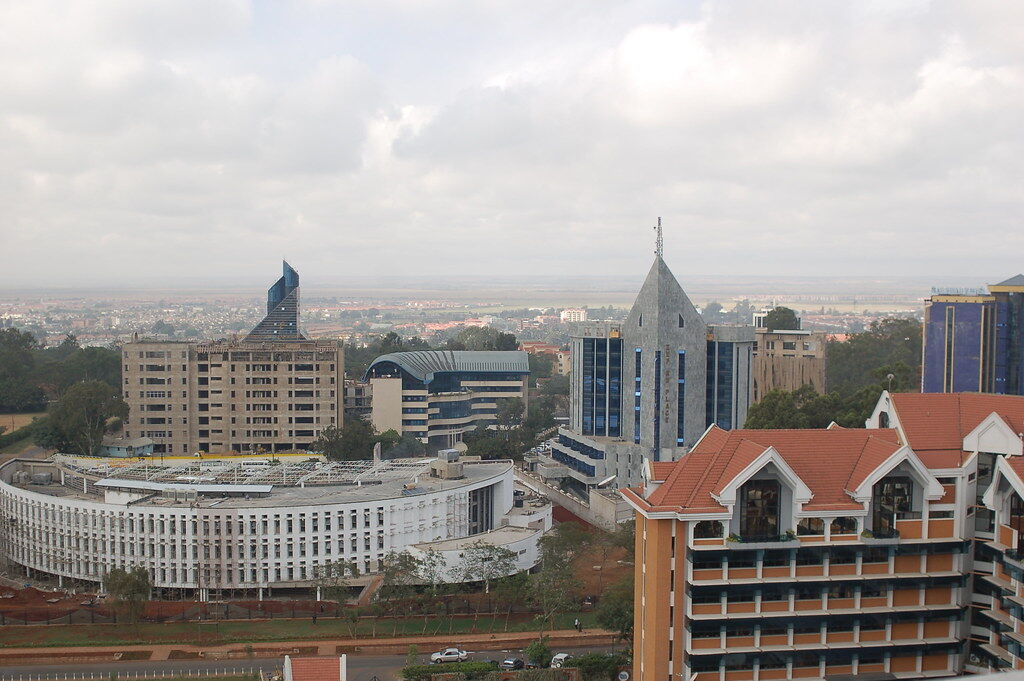
The asset was owned by Golden Jubilee Limited, a Kenyan company that ran it as a Crowne Plaza under IHG.4 The Star reported that Nazir Ahmed Akbarali owned 97.5% of Golden Jubilee and Anish Akbarali 2.5%.12,26 The hotel opened in 2010 with 206 rooms, a ballroom for 300 and more than ten meeting rooms.9,4 An office annex followed in 2016, by MIGA's date.4 The hotel's revenue, occupancy and profit have not been published.
The financing
The capital came in three pieces over about ten months, from three kinds of institution. The framework behind them was two years older.
The purchase, July 2022. Falcon NBO, a Kasada subsidiary, bought all the issued shares of Golden Jubilee.3,12 Kasada announced the deal on 28 July 2022 without a price.9 Business Daily reported an estimated KSh4.6bn, which Ecofin gave as $38.7m.10,11 Sources cited by The Star put it at about KSh4.5bn, or about $37.9m on Ecofin's rate.12 The Competition Authority of Kenya approved the purchase in August and disclosed no price.12 Accor replaced IHG as manager.13
The insurance, December 2022. MIGA's board approved cover on 12 September 2022. On 5 December it issued two guarantees totalling $27.5m to Falcon NBO, for its equity and shareholder loan in Golden Jubilee.3 They insure against expropriation, restrictions on transferring money, and war and civil disturbance. Cover runs for up to 15 years on the equity and 5 years on the shareholder loan.3
The debt, June 2023. IFC lent $11m, and Proparco lent $11m in parallel.1,2 Proparco signed on 5 June 2023 and records its loan as €10,075,105, which it calls a "USD 11m loan".2 It describes the debt as a "senior loan arranged by IFC".2 IFC said the money was to "refurbish, modernize, and expand the former Crowne Plaza".1 Proparco says its loan "is financing the fund's first investment in Kenya, involving the acquisition of the hotel", and the renovation too.2
So the loans paid in part for a purchase that had closed ten months earlier. In a review dated as of May 2023, MIGA wrote that sub-projects other than the first were "currently relying on alternative financing", or had not finalised their agreements with IFC.7 What paid for the hotel in the meantime has not been disclosed.
Why the headline said $49.5m
Ecofin's headline in July 2023 was "Kasada raises $49.5 million to renovate the Crowne Plaza hotel".16 Africa Private Equity News reported the same package.15 The figure is the sum of three numbers: IFC's $11m loan, Proparco's $11m loan and MIGA's $27.5m of guarantees.15,16
The guarantees are insurance on the fund's own investment. MIGA lent nothing to the hotel. As with any insurance, money would flow from MIGA only after a covered loss. The debt raised was $22m. The equity was the fund's, and its amount has not been published.
The package was reported on 20 and 22 July 2023.15,16 The IFC press release now online is dated 20 December 2023, and differs from the version AVCA republished.1,17 We do not know why.
The structure
Who owns the hotel, who lends to it and who insures it, as far as the record shows:
MIGA's $27.5m sits beside the debt. It insures the equity and the shareholder loan, which rank below it.3
| Lenders | IFC, which arranged the debt, and Proparco lending in parallel |
|---|---|
| Amount | $11m each, $22m in all. Proparco records €10,075,105 |
| Currency | US dollars |
| Signed | Proparco on 5 June 2023. IFC's date is not public |
| Ranking | Senior. How they rank against Falcon NBO's shareholder loan is not public |
| Purpose | The refit, and part of the purchase that closed in July 2022 |
| Borrower | IFC names Kasada Hospitality Fund LP; Proparco lists "KASADA", Kenya |
| Tenor and grace period | Not public. The programme's first loan was long, with a grace period |
| Margin, fees, security, covenants | Not public |
| Cover beside them | MIGA: up to 15 years on the equity, up to 5 years on the shareholder loan |
The borrower is unclear. IFC names Kasada Hospitality Fund LP. Proparco lists its customer as "KASADA", headquartered in Kenya.1,2 Whether the loans went to the fund, to Falcon NBO or to Golden Jubilee has not been published.
The terms can be read only from the programme. IFC said later sub-projects were "expected to align with Ayaba in terms of the proposed financial arrangements".5 Ayaba was the first, West African portfolio. Proparco described that loan as "a long-term senior loan, including a grace period taking into account the expected gradual recovery in the industry".19 Our inference is that the Nairobi loans are also long and began with a grace period. The Nairobi pages say nothing either way.
Across the programme, MIGA's guarantees run for up to 15 years. They cover up to 90% of equity or quasi-equity and up to 95% of shareholder loans.4,7 The Kenya review put the programme ceiling at up to €264.7m, about $268m.4 MIGA's percentage of cover on the Nairobi equity is not stated.
The numbers
Price per room. The reported price of $38.7m over 206 rooms is about $188,000 a room.11,9 The price is reported, not disclosed, so this is an estimate.
Debt against price. The $22m of senior debt is about 57% of the reported price. The debt also paid for the works, so its share of total cost is lower. The total cost is not public.
The insured investment. MIGA covers at most 95% of a shareholder loan and 90% of equity.4 If those caps applied here, $27.5m of cover implies at least about $29m of insured equity and shareholder loan. Add the $22m of debt and the money behind the hotel comes to at least about $51m. That is a third more than the reported price, which fits a refit funded from the same sources. This is our inference; no party has stated a total.
Rooms. The 206 rooms became a 162-room Pullman and a 44-room Mercure.2,3 The total did not change.
Currency. Both loans are in dollars.1,2 The shilling set repeated record lows in 2022, and a new low of 124.85/125.05 to the dollar on 6 February 2023.23 How the hotel's revenue matches its dollar debt is not public.
Why it worked
The equity was already raised. Kasada did not have to find investors for one hotel. It had more than $500m committed by a sovereign wealth fund and a hotel group.1
The operator was inside the deal. Accor is an investor in the fund and manages its hotels.5,4 A lender to a hotel worries about who will run it. Here the brand that would run it had its own money in the owner.
The framework existed before the hotel did. IFC approved the programme in April 2021.5 IFC says MIGA issued a master contract covering Kasada's equity in 2021; Ecofin dates the MIGA agreement to January 2022.1,16 Nairobi was the second sub-project under IFC's financing package.6 The template, the reviews and the relationships were in place.
The lenders had a reason of their own to lend. Proparco said that by financing the acquisition it was "affirming its countercyclical role of supporting the hotel industry which has been hard hit by the health crisis".2 Both lenders count jobs kept, and this hotel had shed most of its staff.2,6
- Equity already committed
- More than $500m from a sovereign wealth fund and a hotel group, before this hotel was found.
- Operator with its own money in
- Accor invests in the fund and runs its hotels.
- A programme agreed in advance
- IFC approved the programme in April 2021; Nairobi was its second sub-project.
- A development case
- A hotel that had shed most of its staff, and lenders that count jobs kept.
- An asset a lender can value
- 206 rooms in Upper Hill; a price reported at about $188,000 a room.
Damiba later described what the insurance did for the equity. "MIGA provided Kasada with extensive guarantee coverage at competitive pricing across our target markets and geographies across key locations in Sub-Saharan African, which helped us to execute with increased certainty each of our investment transactions."8
What happened next
Accor announced the Pullman Hotel Nairobi Upper Hill in May 2024, with 162 rooms and a WOJO co-working space, to open in June.20,21 It was billed as the first Pullman in East Africa. On 24 June ATTA reported it set to open at the end of the month.22
In April 2025 the World Bank said the IFC and Proparco loans "have enabled the environmentally friendly modernization and expansion" of the former Crowne Plaza.8 It said MIGA's $225m of guarantees to Kasada "enabled $450 million in foreign direct investments" in the region's hospitality sector.8
By June 2025 Kasada had 19 hotels in seven sub-Saharan countries, and was planning a first deal in Morocco.24 We found no default, restructuring, refinancing or sale of the Nairobi hotel.
IFC approved the programme in April 2021 and MIGA had a master contract in place. When Nairobi came along, the template, the reviews and the relationships already existed.
Kasada closed the purchase in July 2022 without the development debt. The loans arrived ten months later and paid in part for a purchase already made.
MIGA's $27.5m covers Falcon NBO's equity for up to 15 years against expropriation, transfer restrictions and war. That is what lets a sovereign fund hold one hotel in Nairobi.
Both loans are in dollars. The shilling set a record low four months before Proparco signed. How the hotel matches its revenue to its debt is not public.
The trade press added $27.5m of insurance to $22m of loans. A reader who took the headline as money raised would put the debt at more than twice its size.
From IFC's first disclosure to Proparco's signature took 27 months. On its first portfolio Kasada used a Société Générale bridge, later refinanced by IFC and Proparco.
What we do not know
- The loans' tenor, grace period, amortisation, rate, fees, security and covenants, and whether the two loans are identical.
- Which entity borrowed, and how the senior loans rank against Falcon NBO's shareholder loan.
- How much equity and shareholder loan Falcon NBO put in, the renovation budget and the total cost.
- What paid for the July 2022 purchase before the June 2023 debt. MIGA says "alternative financing" without naming it.7
- MIGA's premium, its percentage of cover on this investment, and whether the cover has been called.
- The advisers on the purchase and the financing. Business Daily quoted an unnamed "transaction advisor"; we could read only its headline.10
- Occupancy, room rates, revenue, earnings and debt service cover since reopening, and whether EDGE certification was achieved.
What a founder in an emerging market can take from it
Founders in Africa and other emerging markets ask us the same question. Who will fund us, on what terms, and where do development finance institutions fit? This case gives one set of answers, for one hotel. What follows is our read of what carries over.
Development finance came after the equity
IFC and Proparco did not buy the hotel. A fund with more than $500m committed did, and the lenders arrived ten months later.1,2 Our read is that a development finance institution is rarely the first money in. It supplies the long loan that commercial banks will not, once a sponsor has taken the first risk.
They will look at everything, and publish it
IFC appraised the hotel on site on 6 to 8 June 2022, before the purchase was announced.4,6 MIGA published an environmental and social action plan for the project in August 2022.14 Both rated it category B.3,6 Proparco expects the building to reach EDGE green certification within two years.2
All of it is public. IFC disclosed its summary two months before its board approved the programme.5 MIGA disclosed its proposed guarantee a month before its board.3 A founder who cannot live with that degree of disclosure should look elsewhere.
Expect more than one lender
IFC's case for its own role included bringing in "debt funding from another lender".5 Here that lender was Proparco, lending the same amount in parallel.2 Two institutions means two credit processes. The arranger brings the second, and the borrower answers both.
The currency risk stays with you
Both loans are in dollars, and the shilling fell to a record low four months before Proparco signed.2,23 Nothing we read says how that risk was handled. One comparable shows a different answer. On Onomo Hotels in 2021, IFC put up to €15.2m (about $18.5m) of concessional subordinated debt under an A loan of up to €20.9m (about $25m).25 IFC said the concessional layer "reduces the risk of the senior loans to a level that meets IFC risk/reward criteria".25 We found no such layer in Nairobi.
A guarantee protects the equity, and lends nothing
MIGA's cover went to Falcon NBO, the equity holder.3 It made the fund's investment in Kenya safer against the state and against war. Our read is that this is what lets a sovereign wealth fund commit to one hotel in Nairobi. It is not money, and a founder who counts it as money will plan a raise $27.5m too large.
Plan for the time it takes
From IFC's first disclosure in February 2021 to Proparco's signature in June 2023 was 27 months.5,2 From MIGA's disclosure to its guarantees was about four months.3 Kasada closed its purchase without the development finance in place. On its first portfolio, Société Générale provided bridge financing that the IFC and Proparco loan later replaced.18 Our view is that a founder should plan to close without the development bank, then refinance into it.
What the sponsor has to bring
Kasada brought committed equity, an operator with money in the deal, a programme agreed in advance and an asset of 206 rooms.1,5,9 Each of those answered a question a lender would otherwise have asked. A founder without a sponsor like that should expect the development bank to ask who will stand behind the business if recovery is slow.
The development banks supplied the length of the loan. The sponsor supplied everything else.
Method. Every figure comes from the sources listed. The purchase price is as reported; Kasada did not disclose it. The dollar value of KSh4.6bn is Ecofin's. We converted KSh4.5bn at the rate Ecofin's figure implies, about $8.41m per billion shillings. The Proparco euro amount is Proparco's own and implies about $1.092 to the euro at signature. The Onomo and MIGA programme euro amounts are converted approximately and are given for scale. Price per room, debt against price, the insured investment and the elapsed times are our arithmetic and are marked as such. We have not spoken to any party. Norvian Capital Partners has no relationship with any party in this case.
“The development banks supplied the length of the loan. The sponsor supplied everything else.”
Sources
- IFC, Proparco and MIGA Back Kasada to Support Kenya's Hospitality Sector, IFC, 20 December 2023
- Contributing to the development of the hotel sector in Kenya (project PKE1158), Proparco, signed 5 June 2023
- Kasada Hospitality Fund LP (project 14979, Kenya), project brief, MIGA, board approval 12 September 2022
- Kasada Hospitality Fund LP (Kenya), Environmental and Social Review Summary, MIGA, updated August 2022
- Kasada Hospitality Fund LP (project 44585), Summary of Investment Information, IFC, disclosed 26 February 2021, updated 25 October 2025
- Kasada Hospitality Fund LP (project 44585), Environmental and Social Review Summary, IFC, updated June 2023
- Kasada Hospitality Fund LP (Ivory Coast, Senegal, Rwanda), Environmental and Social Review Summary, MIGA, as of May 2023
- Hospitality Assured: MIGA Guarantees Boost Tourism Jobs in Africa, World Bank, 15 April 2025
- Kasada Acquires Former Crowne Plaza in Nairobi's Upper Hill District, Kasada (Business Wire), 28 July 2022
- Qatari fund buys Crowne Plaza Hotel for Sh4.6bn, Business Daily, 26 July 2022
- Kasada Capital Management acquires Kenyan Crowne Plaza Hotel, Ecofin Agency, 26 July 2022
- CAK approves selling of Crowne Plaza, The Star (Kenya), 23 August 2022
- Accor to replace InterContinental as manager of Crowne Plaza hotel, Business Daily, 1 September 2022
- Environmental and Social Action Plan for Kasada Project Umbrella (Kenya), MIGA (via the Early Warning System), August 2022
- Kasada Hospitality Fund secures investment for Nairobi hotel, Africa Private Equity News, 20 July 2023
- Kenya: Kasada raises $49.5 million to renovate the Crowne Plaza hotel, Ecofin Agency, 22 July 2023
- Kasada acquires Nairobi's former Crowne Plaza, with backing from IFC and Proparco, AVCA (republished IFC text), undated
- Proparco and IFC to finance Kasada's first acquisition to support the hospitality sector in sub-saharan Africa, Proparco (Kasada press release), 27 July 2021
- Kasada Hospitality Fund: senior loan for a fund specialized in the hotel sector in Sub-Saharan Africa (project PZZ1507), Proparco, signed 22 June 2021
- Pullman to open first hotel in East Africa: Nairobi Upper Hill in Kenya launches in June, Hospitality Net (Accor), 24 May 2024
- French hospitality firm Accor to open premium brand in Kenya, The Star (Kenya), 6 May 2024
- Pullman Hotels opens first East Africa property in Nairobi, ATTA, 24 June 2024
- Kenyan shilling hits new low then recovers, importer FX demand weighs, Reuters (via Kitco), 6 February 2023
- Kasada targets first North Africa hotel deal, Bloomberg (via The Star, Malaysia), 4 June 2025
- Onomo Hotels (project 43696), Summary of Investment Information, IFC, disclosed 7 April 2021
- CAK Approves Sale of Crowne Plaza and 680 Hotels in Nairobi, Khusoko, 23 August 2022
Cite as: “A Nairobi hotel borrowed $22m from two development banks, ten months after it was bought”, Norvian Review, 24 September 2026.